
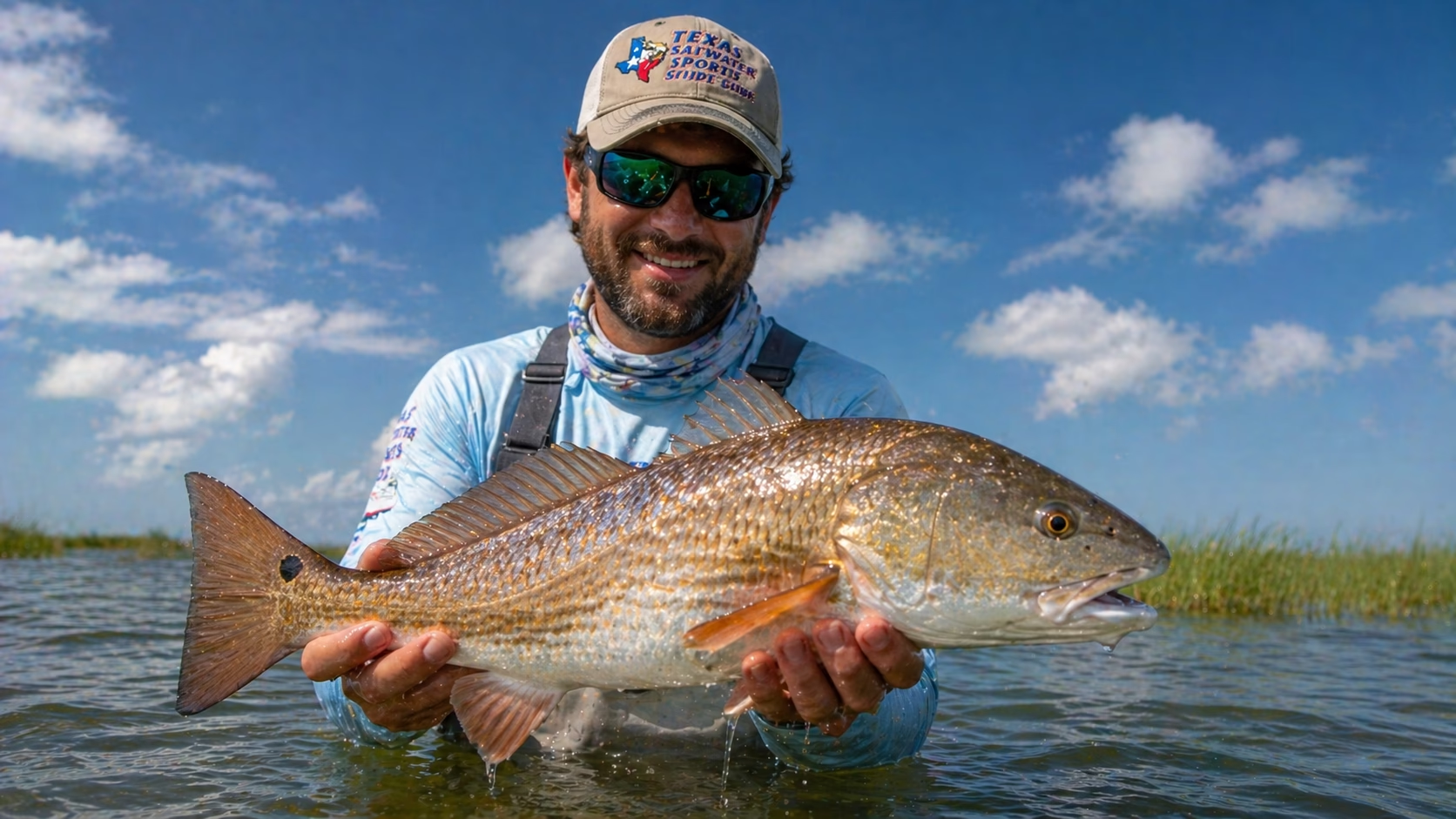
A Texas Coast tradition written in wind, tide, and copper tails
If you’ve spent any time on the middle Texas coast, you already know there’s something about redfish that gets in your bones. Maybe it’s the way they push water across a calm flat like a slow-moving shadow. Maybe it’s that bronze flash when one turns on a bait. Or maybe it’s just that steady pull that reminds you you’re connected to something wild and honest.
Catch redfish in Copano Bay long enough, and you begin to understand that this isn’t just fishing. It’s reading water, watching weather, and learning the quiet language of a bay that doesn’t give up her secrets easily.
Let’s take a slow ride through it, the way it ought to be done.
Copano Bay: A Working Man’s Redfish Bay
Copano Bay sits just north of Rockport, part of the larger Aransas Bay system. It’s not flashy water. It’s practical water. Shallow in most places, rich in life, and shaped by wind and tide more than anything else.
-
Size: Roughly 10–12 miles across
-
Depth: Mostly shallow, averaging 3–6 feet with deeper channels
-
Bottom: A mix of mud, sand, oyster shell, and scattered grass beds
This combination is exactly what redfish like. They’re built for it. They root, cruise, and hunt these flats like cattle moving through pasture.
Rivers That Feed the Bay
Copano Bay gets its life from freshwater inflow:
-
Aransas River
-
Mission River
These rivers carry nutrients that feed shrimp, crabs, and baitfish. After a rain, you’ll see color lines where fresh meets salt. That edge often holds redfish like a fence line holds deer.
Bait Camps, Marinas, and Boat Access
There’s still a bit of old Texas along Copano’s shoreline. Weathered boards, hand-painted signs, and folks who know the water better than any map.
Boat Ramps & Access
Copano Bay State Fishing Pier (TPWD)
-
146 Park Rd 13, Rockport, TX 78382
-
Phone: (361) 729-2858
-
Website: https://tpwd.texas.gov
-
Excellent shore access and night fishing
Goose Island State Park Boat Ramp
-
202 S. Palmetto St., Rockport, TX 78382
-
Phone: (361) 729-2858
-
Reliable launch, good access to surrounding bays
Rockport Beach Boat Ramp
-
210 Seabreeze Dr, Rockport, TX 78382
-
Phone: (361) 729-6661
-
Website: https://cityofrockport.com
Bait Camps
-
Live shrimp (when available)
-
Finger mullet
-
Croaker (seasonal)
Most locals will tell you the same thing: if you can’t catch redfish on fresh shrimp or a well-worked lure, it’s not the bait’s fault.
Lodging Near Copano Bay
Fishing starts before daylight, so being close matters.
Goose Island State Park Campground
-
202 S. Palmetto St., Rockport, TX
-
Phone: (361) 729-2858
-
Website: https://tpwd.texas.gov
Copano Bay RV Resort
-
3101 FM 1781, Rockport, TX 78382
-
Phone: (361) 729-5900
-
Website: https://copanorv.com
La Quinta Inn & Suites Rockport
-
2921 Highway 35 N, Rockport, TX 78382
-
Phone: (361) 727-9824
-
Website: https://wyndhamhotels.com
Plenty of waterfront rentals offer private piers where you can fish under the lights at night.
Getting There
From Austin (3 hours)
US-183 South → US-77 South → TX-188
From Houston (3 hours)
US-59 South → TX-35 South
From Dallas / Fort Worth (6–7 hours)
I-35 South → US-77 South
From San Antonio (2.5 hours)
I-37 South → TX-188
From Corpus Christi (30 minutes)
TX-35 North
Weather and Water Conditions
Copano Bay fishing revolves around weather more than anything else.
-
Spring: Windy, warming water, active fish
-
Summer: Calm mornings, heat-driven patterns
-
Fall: Best fishing of the year
-
Winter: Slower, more predictable
Wind is your biggest factor. A light southeast breeze is ideal. A hard north wind after a front will drop water levels and reposition fish overnight.
Redfish Seasons and Limits (TPWD)
According to Texas Parks & Wildlife:
-
Daily Limit: 3 redfish per person
-
Slot Size: 20–28 inches
-
Oversize: One fish over 28 inches allowed with tag
Always check current regulations at: https://tpwd.texas.gov
Where to Catch Redfish in Copano Bay
This is where things get interesting.
1. Shallow Flats
Redfish love skinny water.
-
Depth: 6 inches to 2 feet
-
Look for: wakes, tails, nervous bait
These are your classic sight-fishing areas.
2. Grass Beds
Grass holds life.
-
Shrimp
-
Small crabs
-
Baitfish
Redfish cruise edges and pockets in the grass. Work these areas slowly.
3. Oyster Reefs
Shell is structure.
-
Holds bait
-
Breaks current
-
Creates ambush points
Be careful—reefs will eat a lower unit in a hurry.
4. Shorelines and Windblown Banks
Wind pushes bait.
-
Fish the windward side
-
Muddy water doesn’t bother redfish
5. Back Lakes and Marsh
These areas are redfish nurseries.
-
Best in summer and fall
-
Shallow, protected water
How to Catch Redfish in Copano Bay
Bay Boat Fishing
A shallow-draft bay boat is ideal.
-
Drift flats
-
Use trolling motor quietly
-
Cover water until you find fish
Wade Fishing
There’s something honest about wading.
-
Quiet approach
-
Better casting angles
-
More connection to the water
Shore and Pier Fishing
You don’t need a boat.
-
Fish passes, cuts, and lights at night
-
Live shrimp under cork works well
Tides and Water Movement
Redfish respond to movement.
-
Incoming tide: pushes bait onto flats
-
Outgoing tide: pulls bait off flats into drains
Fish the edges during movement.
No tide, no bite—that’s an old truth that still holds.
Seasonal Redfish Patterns
Spring
-
Fish move shallow
-
Look for warming mud flats
-
Use soft plastics and spoons
Summer
-
Early morning topwater bite
-
Move to deeper water midday
-
Fish marshes and back lakes
Fall
This is prime time.
-
Schools of redfish
-
Aggressive feeding
-
Cooler water
Winter
-
Fish slow down
-
Look for sun-warmed mud
-
Fish deeper holes during cold spells
Best Tackle for Redfish
Rods & Reels
-
6’6”–7’ medium or medium-heavy rod
-
2500–3000 spinning reel
Line
-
10–20 lb braid
-
20–30 lb fluorocarbon leader
Best Lures for Copano Bay Redfish
Gold Spoon
-
Classic
-
Weedless
-
Perfect for grass
Soft Plastics
-
3–5 inch paddle tails
-
Colors:
-
Texas roach
-
Chartreuse
-
New penny
-
Topwater
-
Early mornings
-
Bone or chrome
Jigheads
-
1/8 to 1/4 oz depending on depth
Presentation Tips
-
Slow down
-
Keep lure near bottom
-
Watch for subtle strikes
Redfish don’t always slam a bait. Sometimes it just feels “heavy.”
Set the hook anyway.
Depth and Water Clarity
-
Shallow flats: 1–2 feet
-
Channels: 4–8 feet
-
Winter holes: up to 10 feet
Clear water calls for natural colors. Dirty water calls for contrast.
Boating Safety on Copano Bay
This bay can be unforgiving.
-
Shallow water everywhere
-
Oyster reefs just under the surface
-
Sudden weather changes
Always:
-
Wear a life jacket
-
Watch the weather
-
Use GPS and charts
-
Respect the wind
A calm morning can turn rough by noon.
Final Thoughts: Learning the Rhythm
To catch redfish in Copano Bay, you don’t just chase fish—you learn patterns.
You learn how the wind lays across the water.
You learn where bait gathers when the tide moves.
You learn that sometimes the best thing you can do is slow down and watch.
There’s a rhythm here. Not loud, not rushed. Just steady.
And once you find it… once you hook into that first copper-backed red pushing across a shallow flat… you’ll understand why folks keep coming back.
Not for the numbers.
For the feeling.
0 Comments