
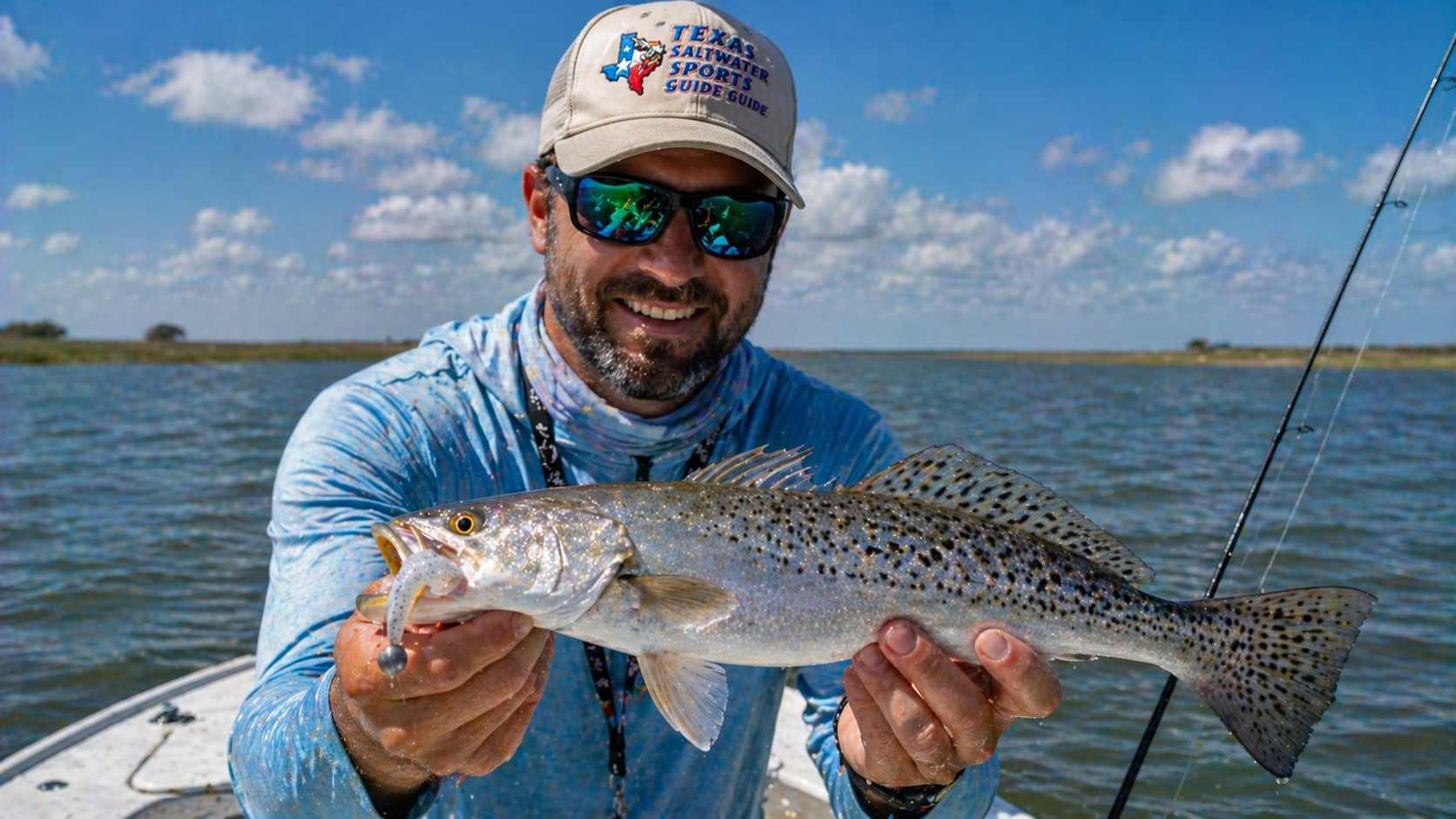
A Texas coast rhythm written in tides, wind, and silver flashes
There’s a certain kind of quiet that settles over Copano Bay just before sunrise. Not silence exactly, but a soft stillness. The kind where you can hear mullet flip a hundred yards away and feel the day beginning to lean toward something good. That’s the hour when a man, or anyone who’s spent enough time chasing trout, starts to believe.
Speckled trout fishing in Copano Bay isn’t about luck. It’s about timing, water, and understanding how this shallow Texas estuary breathes. Stay with it long enough, and you’ll learn that trout aren’t scattered by chance. They’re where the conditions tell them to be.
Let’s walk through it the way it’s learned best… slow, steady, and close to the water.
Copano Bay Overview: A Trout Bay with Character
Copano Bay sits just north of Rockport along the middle Texas coast, part of the larger Aransas Bay system. It’s not a deep bay. Not a complicated bay. But it’s a productive one, and it holds trout year-round.
-
Size: Approximately 10–12 miles wide
-
Average Depth: 3–6 feet
-
Bottom Composition: Sand, mud, scattered shell, and grass beds
This mix creates ideal feeding zones for speckled trout, especially along transitions where one bottom type meets another.
Rivers That Feed Copano Bay
Two primary freshwater sources influence Copano:
-
Aransas River
-
Mission River
These rivers bring in nutrients that support shrimp, crabs, and baitfish. According to Texas Parks & Wildlife fishing reports, these inflows play a key role in bait concentration, especially after rainfall events.
Where fresh water meets saltwater, you’ll often find trout staging along those color changes.
Fish Species in Copano Bay
While this article focuses on trout, Copano Bay is a full-bodied fishery:
-
Speckled Trout (Spotted Seatrout)
-
Redfish
-
Black Drum
-
Flounder
-
Sheepshead
But trout are the thinking man’s fish here. They’re more sensitive to conditions, more dependent on structure, and more rewarding when you figure them out.
Bait Camps, Marinas, and Boat Ramps
You won’t find a lot of high-rise marina developments here. What you’ll find instead is the kind of places that have been serving fishermen for decades.
Boat Ramps & Access
Copano Bay State Fishing Pier (TPWD)
-
Address: 146 Park Rd 13, Rockport, TX 78382
-
Phone: (361) 729-2858
-
Website: https://tpwd.texas.gov
Goose Island State Park Boat Ramp
-
Address: 202 S. Palmetto St., Rockport, TX 78382
-
Phone: (361) 729-2858
Rockport Beach Park Boat Ramp
-
Address: 210 Seabreeze Dr, Rockport, TX 78382
-
Phone: (361) 729-6661
-
Website: https://cityofrockport.com
Bait Camps
Local bait stands typically offer:
-
Live shrimp
-
Croaker (summer months)
-
Finger mullet
TPWD fishing reports frequently note that live shrimp under popping corks remain one of the most consistent trout producers, especially for anglers new to the bay.
Lodging Near Copano Bay
A good trout day starts before daylight, so staying close helps.
Goose Island State Park Campground
-
202 S. Palmetto St., Rockport, TX
-
Phone: (361) 729-2858
-
Website: https://tpwd.texas.gov
Copano Bay RV Resort
-
3101 FM 1781, Rockport, TX 78382
-
Phone: (361) 729-5900
-
Website: https://copanorv.com
La Quinta Inn & Suites Rockport
-
2921 Highway 35 N, Rockport, TX 78382
-
Phone: (361) 727-9824
-
Website: https://wyndhamhotels.com
Waterfront rentals with private piers are also popular, especially for night trout fishing under lights.
Getting There
From Austin (3 hours)
US-183 South → US-77 South → TX-188
From Houston (3 hours)
US-59 South → TX-35 South
From Dallas / Fort Worth (6–7 hours)
I-35 South → US-77 South
From San Antonio (2.5 hours)
I-37 South → TX-188
From Corpus Christi (30 minutes)
TX-35 North
Weather and Seasonal Influence
Speckled trout are sensitive to conditions. More than redfish, they respond to:
-
Water temperature
-
Salinity
-
Wind direction
-
Tidal movement
Seasonal Overview
-
Spring: Warming water, scattered fish
-
Summer: Early morning topwater bite
-
Fall: Peak feeding activity
-
Winter: Deep, slow patterns
Speckled Trout Limits (TPWD)
Regulations can change, so always verify:
-
Daily Limit: Typically 3 fish
-
Size Range: Often 15–25 inches (check current rules)
Visit: https://tpwd.texas.gov
Where to Catch Speckled Trout in Copano Bay
1. Grass Flats
These are trout feeding zones.
-
Depth: 2–4 feet
-
Look for bait activity
-
Best during low wind conditions
2. Shell Reefs
Shell holds heat and bait.
-
Fish edges of reefs
-
Especially productive in spring and fall
3. Drop-offs and Channels
When temperatures change, trout move deeper.
-
Depth: 4–10 feet
-
Ideal during summer midday and winter
4. Windward Shorelines
Wind pushes bait.
-
Trout position on these banks
-
Slightly stained water is often productive
5. Back Lakes and Drains
Especially good during moving tides.
-
Outgoing tide pulls bait
-
Trout wait at pinch points
How to Catch Speckled Trout in Copano Bay
Bay Boat Fishing
Most anglers use shallow-draft bay boats.
-
Drift fishing is effective
-
Use trolling motor to stay quiet
-
Cover water until you locate fish
Wade Fishing
A traditional and effective method.
-
Quiet approach
-
Better lure control
-
Ideal over grass flats
Shore and Pier Fishing
You don’t need a boat.
-
Fish lights at night
-
Use shrimp under cork
Tides and Trout Behavior
Trout feed with moving water.
-
Incoming tide: fish move shallow
-
Outgoing tide: fish hold near drains
Slack tide often means slower fishing.
Speckled Trout by Season
Spring
-
Fish transition from deep to shallow
-
Focus on shell and grass edges
-
Use soft plastics and suspending baits
Summer
-
Early morning is best
-
Topwater bite strong at sunrise
-
Move deeper as sun rises
TPWD reports consistently highlight early morning surface activity during summer months.
Fall
This is prime time.
-
Trout feed aggressively
-
Follow bait schools
-
Bird activity often signals feeding fish
Winter
-
Fish slow down
-
Look for deeper water and mud bottoms
-
Use slow presentations
Best Rods and Reels
-
Rod: 6’6”–7’ medium-light or medium
-
Reel: 2500–3000 spinning reel
Line and Leader
-
10–15 lb braid
-
20 lb fluorocarbon leader
Best Lures for Copano Bay Trout
Topwaters
-
Super Spook Jr.
-
Skitter Walk
Best early morning or late evening.
Soft Plastics
-
Paddle tails (3–5 inches)
-
Colors:
-
Plum/chartreuse
-
Glow
-
New penny
-
Suspended Twitch Baits
-
Corky-style baits
-
Effective in cooler water
Jigheads
-
1/8 oz for shallow
-
1/4 oz for deeper water
Lure Presentation
Trout are not always aggressive.
-
Use a slow retrieve
-
Add pauses
-
Keep lure in strike zone
Sometimes the bite feels like nothing more than weight.
Depth and Water Clarity
-
Shallow flats: 2–4 feet
-
Channels: 4–10 feet
-
Winter: deeper structure
Clear water calls for natural colors. Stained water calls for contrast.
Boating Safety on Copano Bay
Copano is shallow and can be tricky.
-
Oyster reefs are everywhere
-
Water levels change quickly
-
Wind can build chop fast
Always:
-
Wear a life jacket
-
Watch weather forecasts
-
Use GPS mapping
-
Idle unfamiliar areas
Final Thoughts: The Rhythm of Trout Fishing
To understand speckled trout fishing in Copano Bay, you have to slow down.
You watch the water.
You watch the bait.
You learn how the wind lays across the bay and how the tide pulls through a shoreline.
There’s no shortcut.
But when it comes together—when a trout rolls on a topwater at first light or thumps a soft plastic along a shell edge—you’ll feel it. Not just in your hands, but somewhere deeper.
That’s what keeps folks coming back.
Not just to catch fish.
But to be part of something that moves with the tide and never quite repeats itself the same way twice.

0 Comments