
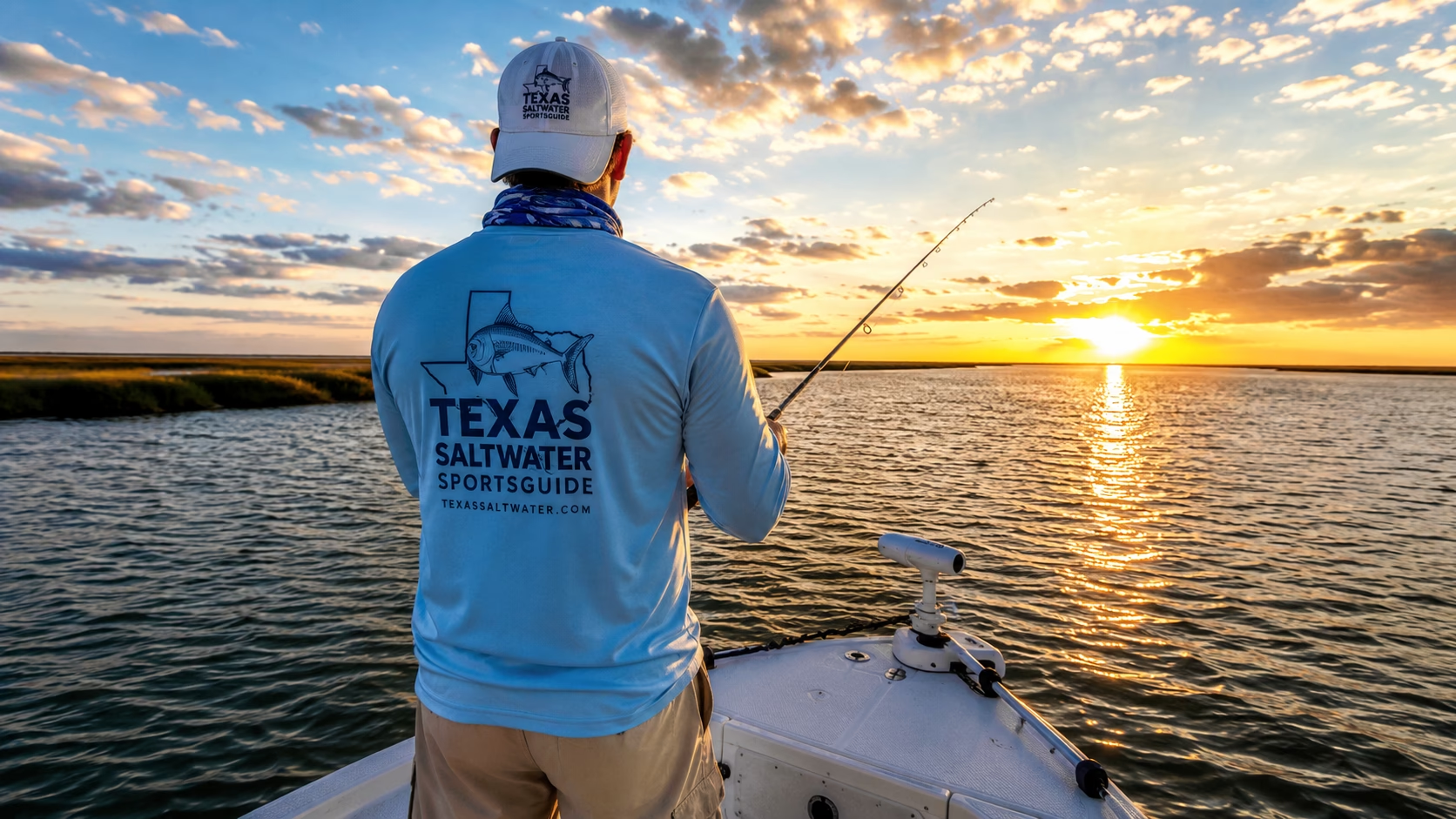
There is something special about watching a copper-colored redfish push a wake across a shallow Texas flat at sunrise. The water glows pink and gold, mullet scatter in every direction, and somewhere in the distance a laughing gull announces the beginning of another day on the coast. For many Texas anglers, that moment is what keeps them coming back year after year.
Mesquite Bay, tucked between Rockport and Port O'Connor along the middle Texas Coast, remains one of the state's most productive redfish nurseries. Protected shorelines, extensive marshes, oyster reefs, grass flats, and abundant forage create nearly perfect habitat for red drum. Whether you're drifting from a bay boat, stalking tailing fish on a shallow flat, or casting from shorelines during a falling tide, Mesquite Bay offers excellent opportunities throughout the year.
As an old fisherman who has spent a lifetime chasing fish across Texas waters, I can tell you that Mesquite Bay reminds me of how Texas bays used to fish decades ago. It's not flashy. It's not crowded. It's simply productive.
Mesquite Bay Overview
Mesquite Bay lies northeast of Rockport and is connected to neighboring San Antonio Bay and Aransas Bay systems. The bay encompasses approximately 20 square miles of shallow estuarine habitat and serves as an important nursery area for redfish, speckled trout, flounder, black drum, and numerous baitfish species.
The bay is bordered by the Aransas National Wildlife Refuge to the north, helping preserve much of its natural shoreline and marsh habitat.
Fish Species Found in Mesquite Bay
While redfish are the primary target for many anglers, Mesquite Bay supports a healthy population of:
-
Redfish (Red Drum)
-
Speckled Trout
-
Southern Flounder
-
Black Drum
-
Sheepshead
-
Mangrove Snapper
-
Croaker
-
Sand Trout
-
Gafftop Catfish
-
Hardhead Catfish
-
Stingrays
-
Sharks during warmer months
The combination of marshes, oyster reefs, grass flats, and tidal drains creates ideal habitat for virtually every coastal gamefish found along the middle Texas coast.
Rivers and Water Sources Feeding Mesquite Bay
Mesquite Bay receives freshwater inflow primarily from:
Guadalupe River
The Guadalupe River is the largest contributor to the surrounding estuary system. Freshwater entering nearby San Antonio Bay influences salinity levels throughout the region.
Mission River
The Mission River contributes freshwater and nutrients into adjacent bays, helping maintain productive estuarine conditions.
Aransas River
The Aransas River also contributes seasonal freshwater inflows that support shrimp, crabs, and baitfish populations.
These freshwater inputs are critical because redfish thrive where fresh and saltwater mix. The resulting ecosystem produces massive amounts of shrimp, crabs, finger mullet, and baitfish that sustain redfish populations year-round.
Best Bait Camps Near Mesquite Bay
Charlie's Fishing Camp
Address:
4401 Highway 35 North
Aransas Pass, TX 78336
Phone:
(361) 758-2628
Website:
https://charliespasture.com
Offers:
-
Live shrimp
-
Croaker
-
Frozen bait
-
Boat launching facilities
-
Fishing supplies
Fulton Fishing Pier Bait Shop
Address:
402 N Fulton Beach Road
Fulton, TX 78358
Phone:
(361) 729-9021
Offers:
-
Live shrimp
-
Finger mullet
-
Tackle
-
Ice and drinks
Conn Brown Harbor Bait Stands
Several bait vendors operate around Conn Brown Harbor in Aransas Pass, supplying live shrimp, croaker, pinfish, and mullet.
Marinas and Boat Ramps Near Mesquite Bay
Cove Harbor Marina
Address:
100 Cove Harbor North
Rockport, TX 78382
Phone:
(361) 729-4464
Website:
https://www.coveharbormarina.com
Email:
info@coveharbormarina.com
Services:
-
Boat slips
-
Fuel dock
-
Launch ramps
-
Fishing guides
-
Restaurant
Rockport Beach Boat Ramp
Address:
210 Seabreeze Drive
Rockport, TX 78382
Phone:
(361) 729-6661
Website:
https://www.cityofrockport.com
Public launch facility with easy access to surrounding bay systems.
Goose Island State Park Boat Ramp
Address:
202 South Palmetto Street
Rockport, TX 78382
Phone:
(361) 729-2858
Website:
https://tpwd.texas.gov
Excellent launching point for accessing nearby flats and shorelines.
Lighthouse Lakes Paddle Trail Launch
Address:
State Highway 361
Aransas Pass, TX 78336
Website:
https://tpwd.texas.gov
Popular launch area for kayaks targeting shallow-water redfish.
Lodging Near Mesquite Bay
Lighthouse Inn at Aransas Bay
Address:
200 South Fulton Beach Road
Rockport, TX 78382
Phone:
(361) 729-4588
Website:
https://www.lighthouseinntx.com
Email:
info@lighthouseinntx.com
Hampton Inn & Suites Rockport
Address:
3677 Highway 35 North
Rockport, TX 78382
Phone:
(361) 727-2228
Website:
https://www.hilton.com
La Quinta Inn & Suites Rockport
Address:
2921 Highway 35 North
Rockport, TX 78382
Phone:
(361) 727-9824
Website:
https://www.wyndhamhotels.com
Driving Distances to Mesquite Bay
Austin to Mesquite Bay
Distance: Approximately 220 miles
Route:
US-183 South to I-37 South through Corpus Christi, then TX-35 North to Rockport.
Travel Time:
Approximately 4 hours.
Houston to Mesquite Bay
Distance: Approximately 215 miles
Route:
US-59 South to Victoria, then US-77 and TX-35 to Rockport.
Travel Time:
About 4 hours.
San Antonio to Mesquite Bay
Distance: Approximately 175 miles
Route:
I-37 South to Corpus Christi, then TX-35 North.
Travel Time:
3 to 3.5 hours.
Corpus Christi to Mesquite Bay
Distance: Approximately 45 miles
Route:
TX-35 North through Aransas Pass and Rockport.
Travel Time:
About 1 hour.
Dallas to Mesquite Bay
Distance: Approximately 425 miles
Route:
I-35 South to San Antonio, then I-37 South and TX-35.
Travel Time:
7 to 8 hours.
Fort Worth to Mesquite Bay
Distance: Approximately 430 miles
Route:
I-35W South through San Antonio, then I-37 South.
Travel Time:
7 to 8 hours.
Mesquite Bay Weather and Fishing Conditions
Spring
Temperatures:
70° to 85°
Spring brings warming water temperatures and aggressive feeding redfish. Shrimp begin moving into the bay, and redfish follow.
Summer
Temperatures:
85° to 100°
Early morning and evening fishing dominate. Redfish often push bait onto shallow grass flats.
Fall
Temperatures:
65° to 85°
Many coastal anglers consider fall the finest redfish season of the year.
Winter
Temperatures:
45° to 70°
Cold fronts concentrate fish into deeper channels, drains, and mud-bottom areas.
Texas Redfish Regulations
Always verify current regulations with Texas Parks and Wildlife before your trip.
Current regulations generally allow:
-
3 redfish per day
-
Slot limit 20 to 28 inches
-
One oversized fish annually with proper tag
Regulations may change, so check TPWD before fishing.
How to Catch Redfish in Mesquite Bay Texas
The secret to consistently catching redfish in Mesquite Bay is understanding how fish move with tides.
Redfish rarely stay in one place. They follow food.
And in Mesquite Bay, food moves with water.
Best Redfish Habitat in Mesquite Bay
Grass Flats
Large grass flats dominate much of Mesquite Bay.
These areas hold:
-
Shrimp
-
Crabs
-
Finger mullet
Look for:
-
Tailing fish
-
Mud boils
-
Nervous baitfish
Water depths:
1 to 3 feet.
Oyster Reefs
Mesquite Bay contains numerous oyster reefs that attract bait and predators.
Fish often position:
-
Along reef edges
-
Down-current sides
-
Adjacent potholes
Depths:
2 to 5 feet.
Marsh Drains
Perhaps the most productive redfish locations in the bay.
When tides fall, shrimp and baitfish are flushed from marshes through narrow drains.
Redfish stack up around these bottlenecks.
Many TPWD coastal fishing reports consistently note redfish feeding around marsh drains during moving tides.
Shorelines
Wind-blown shorelines frequently concentrate bait.
Redfish cruise these banks searching for:
-
Crabs
-
Shrimp
-
Mullet
Depths:
1 to 4 feet.
Seasonal Redfish Patterns
Spring Redfish
As water temperatures climb into the 60s and 70s:
-
Fish leave winter holes
-
Move onto shallow flats
-
Feed aggressively
Best baits:
-
Gold spoons
-
Soft plastics
-
Live shrimp
Summer Redfish
Summer means early starts.
Fish:
-
Dawn shorelines
-
Grass flats
-
Back lakes
Look for:
-
Wakes
-
Tails
-
Pushing water
Best lures:
-
Topwaters
-
Weedless plastics
-
Gold spoons
Fall Redfish
Fall is arguably the best season for Mesquite Bay reds.
Schools become larger.
Fish feed heavily before winter.
Popular lures include:
-
4-inch paddle tails
-
Soft jerkbaits
-
Topwaters
Colors:
-
Mansfield Margarita
-
Chicken on a Chain
-
New Penny
-
Bone
-
Natural mullet
Winter Redfish
Following strong cold fronts:
Fish move into:
-
Deeper channels
-
Mud bottoms
-
Protected coves
Afternoons usually fish best.
Slow presentations become critical.
Best Rods and Reels for Mesquite Bay Redfish
Rod
7-foot Medium Heavy Fast Action
Ideal for:
-
Soft plastics
-
Spoons
-
Topwaters
Reel
2500 to 4000 size spinning reel
Popular choices include:
-
Shimano
-
Daiwa
-
Penn
Line
10 to 20-pound braided line
Leader:
20 to 30-pound fluorocarbon.
Best Redfish Lures
Gold Spoon
One of the most effective redfish lures ever created.
Size:
1/4 to 1/2 ounce
Fish around:
-
Grass
-
Shorelines
-
Flats
Soft Plastic Paddle Tails
Sizes:
3 to 5 inches
Popular colors:
-
New Penny
-
Root Beer
-
Chicken on a Chain
-
Opening Night
Rig on:
1/8 to 1/4 ounce jig heads.
Topwaters
Excellent during:
-
Summer mornings
-
Fall mornings
Popular colors:
-
Bone
-
Chrome
-
Black
Work with a steady walk-the-dog retrieve.
Soft Jerkbaits
Perfect around shallow grass.
Size:
4 to 5 inches
Rig weedless.
Live Bait for Redfish
The most productive natural baits include:
-
Live shrimp
-
Finger mullet
-
Mud minnows
-
Cut mullet
-
Blue crab halves
Fish these around:
-
Drains
-
Oyster reefs
-
Shorelines
Bay Boat Fishing Strategies
A shallow-running bay boat provides access to most productive areas.
Successful anglers:
-
Drift flats
-
Pole shorelines
-
Use trolling motors quietly
Redfish are sensitive to noise in shallow water.
The quieter you are, the more fish you'll catch.
Shore Fishing Opportunities
While much of Mesquite Bay is boat-oriented, anglers can still find opportunities around:
-
Public access shorelines
-
State park areas
-
Nearby piers
-
Marsh edges
Target moving water whenever possible.
Understanding Tides in Mesquite Bay
Tides are everything.
The best fishing generally occurs:
-
Two hours before peak tide
-
Two hours after peak tide
Falling tides are especially productive around marsh drains.
Incoming tides often flood shallow grass flats where redfish move in to feed.
When tide movement is weak, fishing can slow dramatically.
Boating Safety on Mesquite Bay
Mesquite Bay is relatively shallow, and unfamiliar boaters can quickly encounter oyster reefs or mud flats.
Always:
-
Wear a life jacket when underway
-
Carry updated navigation charts
-
Monitor weather forecasts
-
Watch for sudden summer thunderstorms
-
Use GPS mapping
-
Carry emergency communication equipment
-
File a float plan with family members
Strong north winds following winter cold fronts can quickly lower water levels and expose hazards.
Final Thoughts on How to Catch Redfish in Mesquite Bay Texas
Mesquite Bay remains one of the Texas coast's hidden redfish treasures. It may not receive the attention of Laguna Madre or Galveston Bay, but that is part of its charm. The bay still offers stretches of quiet shoreline, expansive grass flats, healthy oyster reefs, and the kind of habitat redfish have loved for generations.
When I think about Mesquite Bay, I picture a calm October morning. A light north breeze ripples the water. Mullet flip along a shoreline. A bronze tail breaks the surface near a patch of turtle grass. The cast lands softly beyond the fish, the spoon flashes once, and the line comes tight.
That moment never gets old.
If you're looking for a place where Texas coastal tradition, natural beauty, and outstanding redfish fishing still come together, Mesquite Bay deserves a spot at the top of your list. With the right tides, a little patience, and a willingness to explore its marshes, reefs, and shorelines, you'll quickly discover why so many experienced anglers consider Mesquite Bay one of the finest redfish destinations on the middle Texas coast.
0 Comments