
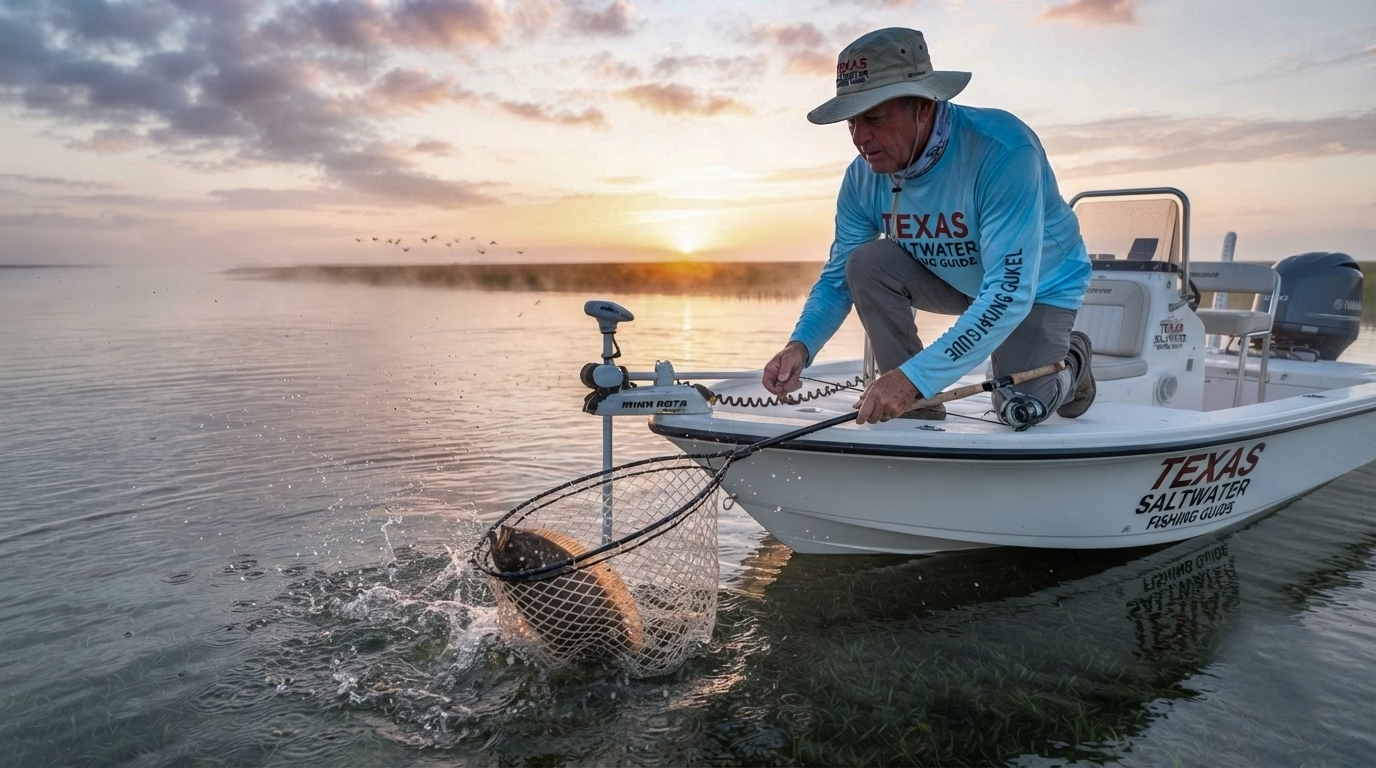
Pull up a lawn chair, grab a cold glass of sweet tea, and let’s take a long, deep breath together. If your shoulders have felt like a pair of high-tension wires lately, and your mind is constantly spinning through an endless list of text messages, work deadlines, and life's little stresses, I have a prescription for you. It doesn’t come in a plastic bottle, and it doesn't require a co-pay. What it asks for is a tank of gas, a trusty rod and reel, and an open heart. Welcome to the ultimate guide on How to Catch Flounder in San Antonio Bay Texas—where the absolute cure for what ails you is found right where fresh river water blends into the salty, life-giving tides of the Gulf.
There is an undeniable, scientifically backed magic that happens to the human psyche when you step away from the concrete jungle and into the great outdoors. Healthcare professionals call it "ecotherapy," but down here on the Texas coast, we just call it a day on the water. When you leave the hum of air conditioners, glowing screens, and non-stop notifications behind, your nervous system finally gets permission to exhale.
The Medicine of the Marsh: Mental and Physical Health Benefits
Spending quality time out on San Antonio Bay does wonders for both body and soul in ways that modern medicine is only beginning to fully appreciate:
- Cortisol Reduction and Mental Clarity: The constant visual stimuli of digital screens bombard our brains day in and day out. In contrast, staring at the open horizon of a coastal bay—where the water meets the sky in a seamless gradient of blue and green—visually rests the mind. Studies show that natural water environments, often called "blue space," significantly lower stress hormones like cortisol and melt away mental fatigue.
- Cardiovascular and Physical Fitness: Whether you’re wading waist-deep through soft mud and seagrass, balancing on the bow of a skiff while poling through the shallows, or carefully working a jig along a deep drop-off for a heavy flatfish, your body is getting a fantastic, low-impact workout. Wading requires core stabilization, active balance, and leg strength, turning pure recreation into healthy physical conditioning.
- Vitamin D and Circadian Alignment: Getting out on the water at first light exposes your eyes and skin to natural morning sunlight. This helps reset your internal circadian rhythm, promoting deeper, more restorative sleep patterns while giving your body a healthy dose of natural Vitamin D for bone and immune health.
- Mindfulness in Motion: Fishing is active meditation. When you are intently watching your line, feeling for the subtle, heavy "mush" of a flounder picking up a soft plastic off the bottom, there is no room left in your brain to worry about work emails or bills. You are entirely anchored in the present moment.
So, let's pack up the gear, leave the daily grind behind, and dive deep into what makes San Antonio Bay one of the most rewarding southern flounder fisheries on the entire Texas coast.
The Lay of the Water: An Overview of San Antonio Bay
San Antonio Bay isn't one of those over-commercialized, heavily industrialized shipping channels where you're dodging massive container ships all morning. This is a wide, wonderfully wild, and remarkably productive estuary system covering roughly 130 square miles (over 80,000 acres) of dynamic saltwater and brackish habitat.
Protected from the full fury of the open Gulf by the remote, windswept shores of Matagorda Island, San Antonio Bay feels isolated, raw, and wonderfully untamed. It is part of the broader Guadalupe-San Antonio river basin system, meaning it thrives on a constant, nutrient-rich influx of fresh water.
Rivers That Feed the Bay
The ecological heartbeat of San Antonio Bay comes from the north and west. The mighty Guadalupe River and the San Antonio River empty directly into the upper reaches of the bay system. This constant flow of freshwater mixes with the tidal saltwater pushing up through Pass Cavallo and smaller cuts, creating a low-salinity sanctuary packed with nutrients. This delicate balance builds a dense underwater forest of shoal grass, widgeon grass, and sprawling oyster reefs that serve as the ultimate nursery for baitfish, shrimp, crabs, and ambush predators like the southern flounder.
The Target Species: Southern Flounder Seasonal Playbook
According to official Texas Parks and Wildlife Department (TPWD) fishing reports and coastal creel data, San Antonio Bay offers exceptional flounder fishing for anglers who understand their seasonal habits. Flounder are masters of camouflage, burying themselves in the sand or mud near structure while waiting for an unsuspecting meal to swim overhead.
- Spring: As waters warm, flounder move out of the deeper channels and spread across shallow grass flats, muddy shorelines, and around scattered oyster pads to feed aggressively on small shrimp and juvenile baitfish.
- Summer: High heat pushes flounder slightly deeper. Look for them holding on the edges of deeper shell reefs, channel drops, and around structure where tidal current sweeps food past their hiding spots.
- Fall: This is the premier time of year. Between October and December, mature southern flounder undergo a massive instinctual migration, leaving the bays and heading offshore through cuts like Pass Cavallo to spawn in the Gulf. This creates incredible staging opportunities around deep channel edges, marsh drains, and jetties. Note that TPWD implements a seasonal closure for flounder harvest from November 1 through December 14 to protect these spawning females.
- Winter: Following the autumn run, remaining fish hunker down in deep guts and protected muddy pockets, requiring a very slow, methodical presentation.
Other Popular Game Fish in the System
- Speckled Trout & Redfish: While targeting flounder, you'll frequently encounter gator trout over grass beds and bronze redfish tailing in the shallows.
- Black Drum & Sheepshead: These structure-loving heavyweights pack tightly around oyster reefs, shell pads, and pilings, readily saving a slow day on the water with a tremendous vertical fight.
For further reading on mastering the coastal bend and targeting these species across neighboring waters, check out these helpful resources from our network:
- Learn about neighboring waters in our guide on Corpus Christi Bay Fishing: A Complete Guide to the Texas Coastal Bend.
- Pick up expert tips on shallow water tactics via Wade Fishing the Laguna Madre: A Timeless Texas Gulf Coast Tradition.
- Explore species-specific strategies in How to Catch Redfish on the Laguna Madre.
- Read up on trout behaviors in Silver Flash in the Mist: The Ultimate Guide to Aransas Bay Speckled Trout Fishing.
- Maintain your vessel properly with Mastering Saltwater Bay Boat Outboard Motor Maintenance: A Comprehensive Guide.
Current Texas Parks & Wildlife Rules and Regulations (2026)
To keep our fisheries thriving for generations to come, strict adherence to Texas Parks and Wildlife Department (TPWD) regulations is mandatory. Always verify current limits on the official Outdoor Annual app before wetting a line, but here are the baseline active retention rules:
| Species | Daily Bag Limit | Minimum Length | Maximum Length | Special Provisions / Notes |
|---|---|---|---|---|
| Southern Flounder | 5 fish per day | 15 Inches | No Max | Closed to harvest from November 1 through December 14 (bag limit = 0 during fall spawn run). |
| Spotted Seatrout | 3 fish per day | 15 Inches | 20 Inches | 1 fish over 30" allowed daily as part of bag limit. |
| Red Drum (Redfish) | 3 fish per day | 20 Inches | 28 Inches | 1 fish over 28" allowed per license year with tag. |
| Black Drum | 5 fish per day | 14 Inches | 30 Inches | 1 fish over 52" allowed daily as part of bag limit. |
| Sheepshead | 5 fish per day | 15 Inches | No Max | Open year-round. |
Conservation Note: Game fish may only be taken by legal pole and line. It is strictly unlawful to use any game fish or part of a game fish as bait.
Infrastructure: Marinas, Boat Ramps, and Bait Camps
Because San Antonio Bay is surrounded by vast wildlife refuges and untamed marshes, your launch points will typically be from nearby coastal communities like Seadrift, Austwell, or Port O'Connor. Here is where you stock up and drop anchor:
Marinas and Boat Ramps
- Seadrift Bayfront Park Boat Ramp: A premier public launching facility providing direct, quick access to the northeastern shores and marsh systems of San Antonio Bay.
- Address: 101 Bay Ave, Seadrift, TX 77983
- Phone: (361) 785-2251
- Website: https://www.seadrifttx.gov
- Email: info@seadrifttx.gov
- Port O'Connor TPWD Boat Ramp: An expansive, multi-lane concrete launching facility offering immediate access to the lower bay complex and Pass Cavallo.
- Address: 301 Park St, Port O'Connor, TX 77982
- Phone: (361) 983-2550
- Website: https://tpwd.texas.gov
- Email: customerervice@tpwd.texas.gov
- Austwell Public Boat Ramp: Perfect for anglers looking to target the upper, freshwater-influenced flats near the Guadalupe delta.
- Address: 200 Pier St, Austwell, TX 77950
- Phone: (361) 286-4261
- Website: https://www.refugiocounty.org
- Email: admin@refugiocounty.org
Essential Local Bait Camps
- Bayfront Bait & Tackle: Your go-to stop in Seadrift for live shrimp, finger mullet, and up-to-the-minute local intelligence on where the flounder are staging.
- Address: 204 Main St, Seadrift, TX 77983 | Phone: (361) 785-3301
- POC Bait House: A legendary fixture in Port O'Connor fully stocked with tackle, ice, and live bait right before you make the run into the salt.
- Address: 602 W Travis St, Port O'Connor, TX 77982 | Phone: (361) 983-4500
Coastal Lodging: Where to Rest Your Head
After a long day of wading flats and battling coastal winds, you'll need a comfortable place to clean your catch, fire up the grill, and unwind.
- Inn at Seadrift: A cozy, angler-friendly lodge offering comfortable rooms and quick proximity to local boat ramps.
- Address: 405 Main St, Seadrift, TX 77983
- Phone: (361) 785-2300
- Website: https://www.innatseadrift.com
- Email: stay@innatseadrift.com
- Swallows Nest Hotel & RV Park: A rustic, highly accommodating spot built for traveling fishing groups needing boat parking and quiet surroundings.
- Address: 401 8th St, Port O'Connor, TX 77982
- Phone: (361) 983-2334
- Website: https://www.swallowsnestpoc.com
- Email: info@swallowsnestpoc.com
- San Antonio Bay Lodge: Premium waterfront accommodations tailored specifically for serious anglers and corporate retreats looking for direct coastal access.
- Address: 120 Coastal Hwy, Austwell, TX 77950
- Phone: (361) 286-9000
- Website: https://www.sanantoniobaylodge.com
- Email: reservations@sanantoniobaylodge.com
Road Trip: Driving Distances and Routes
Getting to San Antonio Bay is a classic Texas tradition. Here is how you navigate from the major metro hubs:
- From Corpus Christi (Approx. 95 Miles | 1.5 Hours): Take US-181 North across Corpus Christi Bay through Portland and Sinton, transitioning to TX-35 North through Refugio and Bayside down toward Tivoli and Seadrift.
- From San Antonio (Approx. 135 Miles | 2.25 Hours): Take I-37 South out of the city down to Three Rivers, exit onto US-59 North briefly toward Beeville, then transition to TX-774 East through Refugio straight toward the coastal plains.
- From Austin (Approx. 165 Miles | 3 Hours): Take US-183 South out of Austin through Lockhart, Gonzales, and Cuero. Transition onto US-77 South to Victoria, then pick up US-87 South to FM 616 East leading directly into Seadrift.
- From Houston (Approx. 160 Miles | 2.5 Hours): Take US-59 South (I-69) out through El Campo and Wharton down to Victoria, then head southeast on US-87 South and FM 616 East.
- From Dallas (Approx. 345 Miles | 5.5 Hours): Head south on I-35E through Waco down to Austin, then take the US-183 South route through Victoria toward the coast.
- From Fort Worth (Approx. 350 Miles | 5.5 Hours): Take I-35W South to connect with I-35 South through Hillsboro, tracking down through Central Texas toward the coastal highway routes.
The Technical Playbook: Rods, Reels, Tackle, and Lures for Flounder
Flounder have a unique mouth structure and a distinct ambush style of feeding, meaning your tackle and presentation must be tailored specifically to them.
Rods and Reels
- Inshore Spinning Setup: A 7-foot Medium power rod with a Fast or Extra-Fast action tip, paired with a saltwater-sealed 2500-series spinning reel. The sensitive tip allows you to detect the subtle pick-up of a flatfish, while the backbone helps drive the hook home through their bony jaws. Spool with 15-pound braided line tied to a 20-pound fluorocarbon leader.
- Baitcasting Setup: A sensitive 6-foot-8-inch medium-heavy casting rod paired with a low-profile reel for working heavy jigs around oyster pads.
The Lure Box and Presentation
- Soft Plastics: 3-inch to 4-inch paddle tails, curly-tail grubs, and shrimp imitations. Flounder love action on the drop and bottom-hugging movement. Use contrasting colors like chartreuse, glow, nuclear chicken, or rootbeer/gold flake.
- Jig Heads: Rig your soft plastics on a 1/4-ounce or 3/8-ounce jig head. The key presentation secret for flounder is keeping your lure in constant contact with the bottom. Cast out, let it sink completely to the mud or shell, and use slow, short hops or a steady drag so it kicks up puffs of silt.
- Live Bait Rigging: A live finger mullet or live mud minnow hooked on a Carolina rig or a heavy jig head and bounced slowly across shell drops is nearly impossible for a hungry flounder to resist.
Bay Depth, Tides, and Boating Safety
San Antonio Bay averages a shallow 2 to 4 feet of depth, crisscrossed by hidden oyster reefs and shallow drains where flounder love to wait in ambush.
- Boat Selection: Shallow-draft skiffs, tunnel-hulls, and center console bay boats are ideal for navigating the shallow flats. Always respect Texas seagrass protection laws—never use your outboard motor to dredge through protected grass beds.
- Tidal Movements: Moving water is critical for flounder fishing. Falling tides pull bait out of the marsh drains and shallows into deeper cuts, forcing flounder to line up along the edges to ambush meals. Position your boat so you can cast across the current and bounce your lure into the strike zone.
- Safety Protocols: Always wear your engine cut-off switch lanyard, check navigation lights for pre-dawn departures, and keep a watchful eye out for shifting shallow shoals and oyster bars.
Bay Records
San Antonio Bay has a rich history of producing exceptional fish. While state records feature massive southern flounder pushing past the 13-pound mark, coastal waters consistently yield impressive "doormats" in the 5-to-8-pound range during the fall migration. Your next well-placed cast along a shell drain could be the one that enters the local record books!
Final Thoughts
Stepping into the waters of San Antonio Bay is more than just a fishing trip—it's a holistic reset for your mind, body, and spirit. Take in the salt air, respect the seasonal conservation closures, support our local family-run bait camps, and let nature work its timeless healing magic. Tight lines and see you on the flats!
0 Comments