
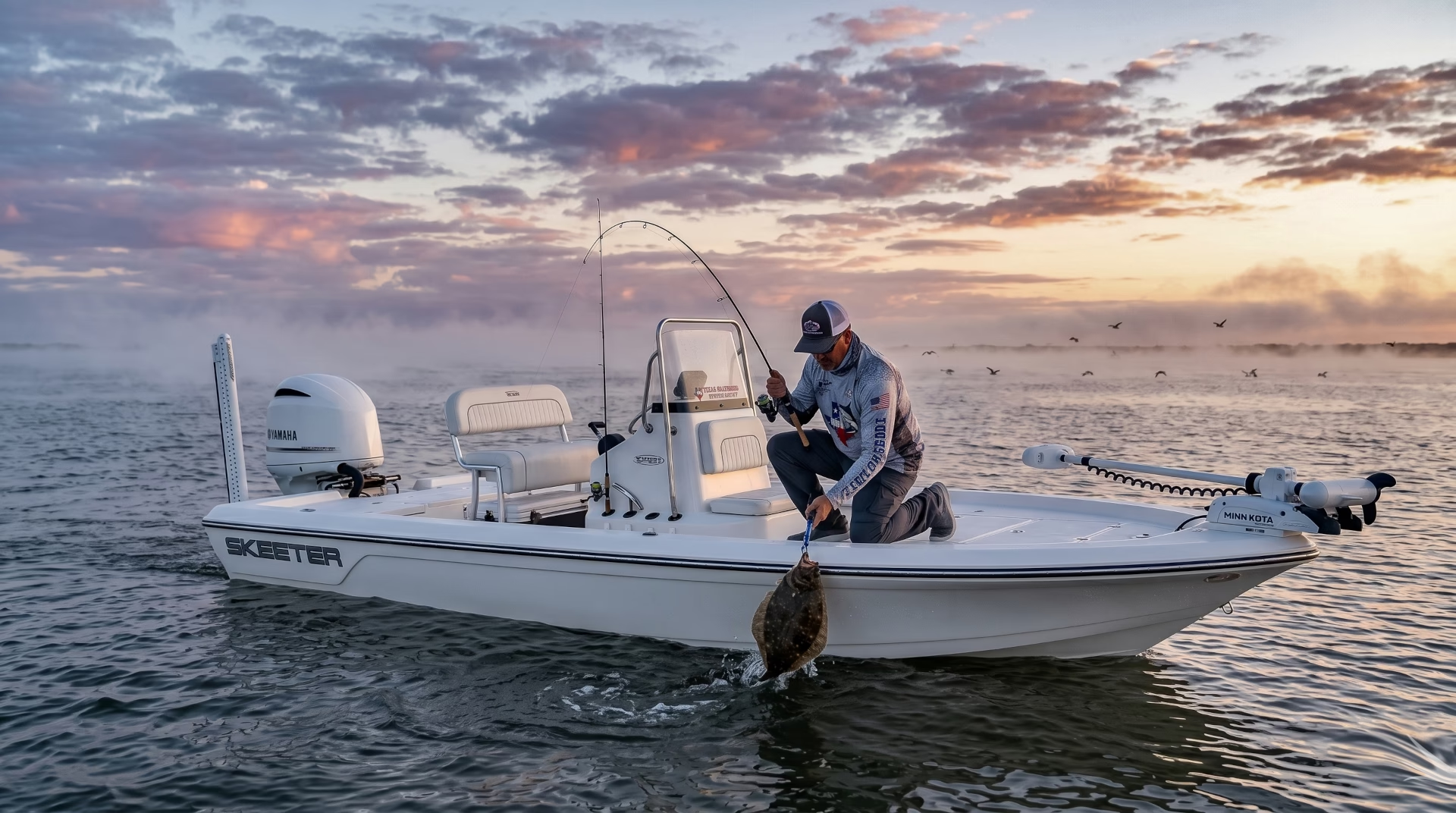
There are few fish along the Texas coast that create as much excitement around the dinner table as a Gulf flounder. Unlike redfish that bulldog their way through shallow grass flats or speckled trout that slash baitfish on the surface, flounder are ambush predators. They lie quietly on the bottom, nearly invisible against sand, mud, and shell, waiting for the perfect meal to swim within striking distance.
Mesquite Bay, nestled along the middle Texas coast between Aransas Bay and San Antonio Bay, has long been one of Texas' hidden gems for flounder anglers. While many fishermen race toward famous trout reefs or redfish marshes, patient anglers who understand flounder behavior often enjoy some of the most consistent action in the bay.
Over the years I've learned that catching flounder isn't usually about covering miles of water. It's about slowing down, paying attention to current flow, structure, and bait movement. Mesquite Bay offers exactly the kind of habitat these flatfish love.
If you've ever wanted to learn where and how to catch flounder in Mesquite Bay Texas, pull up a chair and let's talk fishing.
Mesquite Bay Overview
Mesquite Bay lies along the central Texas coast northeast of Rockport and southwest of San Antonio Bay. The bay covers roughly 20 square miles of shallow estuarine habitat and is protected in many areas by surrounding marshlands and wildlife refuge property.
The bay is relatively shallow throughout most of its area, with depths generally ranging from 2 to 6 feet, although deeper channels, cuts, and drains can reach greater depths.
Mesquite Bay's combination of oyster reefs, marsh drains, sandy shorelines, mud bottoms, and tidal channels creates ideal habitat for flounder throughout the year.
Fish Species Found in Mesquite Bay
Mesquite Bay supports healthy populations of:
-
Southern Flounder
-
Redfish
-
Speckled Trout
-
Black Drum
-
Sheepshead
-
Croaker
-
Sand Trout
-
Gafftop Catfish
-
Hardhead Catfish
-
Mangrove Snapper
-
Stingrays
-
Sharks during warmer months
The abundance of shrimp, mud minnows, finger mullet, croaker, and small baitfish provides a steady food supply for flounder.
Rivers Feeding the Mesquite Bay System
Freshwater inflows are essential to maintaining a productive estuary.
Major freshwater sources influencing Mesquite Bay include:
Guadalupe River
The Guadalupe River feeds nearby San Antonio Bay and helps regulate salinity levels throughout the estuary.
Mission River
The Mission River contributes nutrients and freshwater that support shrimp and baitfish production.
Aransas River
The Aransas River also provides seasonal freshwater inflows that improve overall ecosystem health.
These freshwater systems help create the mixture of salinity and nutrients that make Mesquite Bay one of Texas' most productive fisheries.
Bait Camps Near Mesquite Bay
Charlie's Fishing Camp
4401 Highway 35 North
Aransas Pass, TX 78336
Phone: (361) 758-2628
Website: https://charliespasture.com
Offers:
-
Live shrimp
-
Finger mullet
-
Mud minnows
-
Frozen bait
-
Tackle
-
Ice
Fulton Bait Shop
402 North Fulton Beach Road
Fulton, TX 78358
Phone: (361) 729-9021
Offers:
-
Live shrimp
-
Finger mullet
-
Tackle
-
Ice and beverages
Conn Brown Harbor Bait Facilities
500 East Goodnight Avenue
Aransas Pass, TX 78336
Phone: (361) 758-5300
Numerous bait vendors operate around the harbor seasonally.
Marinas and Boat Ramps
Cove Harbor Marina
100 Cove Harbor North
Rockport, TX 78382
Phone: (361) 729-4464
Website: https://www.coveharbormarina.com
Email: info@coveharbormarina.com
Services include:
-
Boat slips
-
Fuel dock
-
Launch ramps
-
Guide services
-
Restaurant
Goose Island State Park Boat Ramp
202 South Palmetto Street
Rockport, TX 78382
Phone: (361) 729-2858
Website: https://tpwd.texas.gov
Excellent access point to surrounding flats and channels.
Rockport Beach Boat Ramp
210 Seabreeze Drive
Rockport, TX 78382
Phone: (361) 729-6661
Website: https://www.cityofrockport.com
Public launch facility with convenient bay access.
Lighthouse Lakes Kayak Launch
Highway 361
Aransas Pass, TX 78336
Website: https://tpwd.texas.gov
Popular launch point for kayak anglers targeting shallow-water flounder.
Lodging Near Mesquite Bay
Lighthouse Inn at Aransas Bay
200 South Fulton Beach Road
Rockport, TX 78382
Phone: (361) 729-4588
Website: https://www.lighthouseinntx.com
Email: info@lighthouseinntx.com
Hampton Inn & Suites Rockport
3677 Highway 35 North
Rockport, TX 78382
Phone: (361) 727-2228
Website: https://www.hilton.com
La Quinta Inn & Suites
2921 Highway 35 North
Rockport, TX 78382
Phone: (361) 727-9824
Website: https://www.wyndhamhotels.com
Holiday Inn Express Rockport
925 Lady Claire Street
Rockport, TX 78382
Phone: (361) 727-2228
Website: https://www.ihg.com
Driving Directions to Mesquite Bay
Austin
Distance: Approximately 220 miles
Route:
US-183 South to I-37 South, then TX-35 North through Rockport.
Travel Time:
Approximately 4 hours.
Houston
Distance: Approximately 215 miles
Route:
US-59 South through Victoria to TX-35.
Travel Time:
About 4 hours.
San Antonio
Distance: Approximately 175 miles
Route:
I-37 South to Corpus Christi, then TX-35 North.
Travel Time:
3 to 3.5 hours.
Corpus Christi
Distance: Approximately 45 miles
Route:
TX-35 North through Aransas Pass and Rockport.
Travel Time:
About 1 hour.
Dallas
Distance: Approximately 425 miles
Travel Time:
7 to 8 hours.
Fort Worth
Distance: Approximately 430 miles
Travel Time:
7 to 8 hours.
Mesquite Bay Weather
Spring
Average temperatures:
70° to 85°
Mild weather and increasing baitfish activity create excellent fishing conditions.
Summer
Temperatures:
85° to 100°
Early morning fishing becomes most productive.
Fall
Temperatures:
65° to 85°
Prime flounder season arrives.
Winter
Temperatures:
45° to 70°
Flounder move toward deeper channels and protected waters.
Understanding Flounder in Mesquite Bay
Southern flounder spend most of their lives on the bottom.
Both eyes migrate to one side of the head as they mature, allowing them to rest flat against sand, mud, shell, or grass while remaining nearly invisible.
Unlike redfish that roam constantly, flounder prefer to wait for prey.
This ambush style determines where anglers should focus their efforts.
According to Texas Parks and Wildlife coastal fishing reports, productive flounder locations consistently include:
-
Marsh drains
-
Creek mouths
-
Channel edges
-
Oyster reefs
-
Shoreline drop-offs
-
Tidal current funnels
When bait moves, flounder feed.
When water moves, bait moves.
That's the simple formula.
Best Areas for Flounder Fishing in Mesquite Bay
Marsh Drains
Marsh drains are perhaps the most productive flounder locations in the bay.
During falling tides:
-
Shrimp wash from marshes
-
Mud minnows move through drains
-
Small baitfish are forced into open water
Flounder position along drain edges waiting to ambush prey.
Many successful anglers simply move from drain to drain during falling tides.
Oyster Reef Edges
Flounder commonly position where shell transitions to mud or sand.
Look for:
-
Current flow
-
Bait concentrations
-
Slight depth changes
Fish often sit directly on the down-current side of reefs.
Shoreline Points
Points extending into the bay create natural current breaks.
Flounder use these ambush locations extensively.
Best depth:
2 to 5 feet.
Channel Edges
Many larger flounder are caught along deeper channels connecting marshes to open bays.
Target:
-
Channel bends
-
Drop-offs
-
Intersections
Depths:
4 to 10 feet.
Back Lakes
Shallow back lakes often hold large numbers of juvenile baitfish.
Flounder move into these areas during warmer months.
Seasonal Flounder Fishing Patterns
Spring Flounder Fishing
As water temperatures rise above 65 degrees:
-
Flounder return from wintering areas
-
Fish spread across shallow habitats
-
Feeding activity increases
Best baits:
-
Live mud minnows
-
Gulp shrimp
-
Paddle tails
Summer Flounder Fishing
Summer brings stable weather and active fish.
Focus on:
-
Early mornings
-
Marsh drains
-
Shoreline drop-offs
Flounder frequently feed during moving tides.
Fall Flounder Fishing
Fall is legendary on the Texas coast.
As water cools:
-
Flounder begin migration toward Gulf passes
-
Feeding activity intensifies
-
Larger fish become more common
Historically, October and November produce some of the year's best catches.
Winter Flounder Fishing
Following cold fronts:
-
Fish move deeper
-
Activity slows
-
Presentations must become slower
Target channels and deeper bayous.
Best Tides for Flounder Fishing in Mesquite Bay
Flounder fishing and tide movement go hand in hand.
The best tide:
Falling Tide
Falling water funnels bait through drains and channels.
Flounder stack up waiting for easy meals.
This is often the most productive condition in Mesquite Bay.
Incoming Tide
Incoming tides flood grass shorelines and marsh edges.
Flounder move shallow to feed.
Slack Tide
Generally slower fishing.
Little water movement means reduced feeding activity.
Best Depths for Flounder
Most Mesquite Bay flounder are caught in:
-
1 to 4 feet around shorelines
-
2 to 6 feet around oyster reefs
-
4 to 10 feet near channels
Larger fish often hold slightly deeper than smaller fish.
Best Rods and Reels
Rod
Length:
6'6" to 7'
Action:
Medium-Light to Medium Fast
A sensitive rod helps detect subtle flounder strikes.
Reel
2500 to 3000 size spinning reel
Popular brands:
-
Shimano
-
Daiwa
-
Penn
Line
10 to 15-pound braid
Leader:
15 to 20-pound fluorocarbon
The sensitivity of braided line is extremely valuable when detecting soft bites.
Best Lures for Mesquite Bay Flounder
Soft Plastic Shrimp
One of the most effective artificial baits.
Sizes:
3 to 4 inches
Colors:
-
New Penny
-
Natural Shrimp
-
Pearl
-
Molting
Paddle Tail Swimbaits
Sizes:
3 to 4 inches
Colors:
-
Chicken on a Chain
-
Opening Night
-
Texas Roach
-
Plum Chartreuse
Gulp! Swimming Mullet
A favorite among Texas flounder anglers.
Sizes:
3 to 4 inches
Colors:
-
Pearl White
-
Chartreuse
-
New Penny
Curl Tail Grubs
Classic producers for decades.
Fish slowly along bottom structure.
Best Natural Baits
Many flounder anglers still prefer natural bait.
Top choices include:
-
Live mud minnows
-
Finger mullet
-
Live shrimp
-
Fresh dead shrimp
-
Mud minnows on Carolina rigs
Fish slowly.
Flounder often hold bait before fully committing.
Wait briefly before setting the hook.
Bay Boat Fishing Techniques
Bay boats provide access to remote portions of Mesquite Bay.
Successful strategies include:
-
Drifting shoreline contours
-
Working marsh drains
-
Anchoring near channel intersections
-
Using trolling motors quietly
Flounder rarely require covering vast areas.
Methodical presentations often outperform speed.
Kayak Fishing for Flounder
Mesquite Bay is a kayak angler's paradise.
Benefits include:
-
Stealth
-
Access to shallow marshes
-
Minimal disturbance
Many of the bay's best flounder areas are inaccessible to larger boats.
Shore Fishing Opportunities
Several public access areas provide productive fishing.
Target:
-
Shoreline drains
-
Points
-
Channel edges
Cast parallel to shoreline structure whenever possible.
Slow retrieves are usually best.
Current Texas Flounder Regulations
Regulations change periodically.
Always verify current regulations with Texas Parks and Wildlife before fishing.
Texas has implemented conservation measures in recent years to protect Southern Flounder populations.
Check TPWD for current:
-
Season dates
-
Daily bag limits
-
Minimum length requirements
Boating Safety in Mesquite Bay
Mesquite Bay contains numerous shallow flats and oyster reefs.
Always:
-
Wear a life jacket while underway
-
Carry GPS mapping
-
Watch weather forecasts
-
Monitor tide levels
-
Carry communication equipment
-
Avoid running unfamiliar flats at speed
-
Use navigation lights before sunrise
Winter northers can rapidly lower water levels and expose reefs and mud flats.
Final Thoughts on Flounder Fishing in Mesquite Bay
There is something uniquely satisfying about flounder fishing. It isn't usually fast-paced. It requires patience, attention to detail, and a willingness to fish slowly. In many ways, flounder fishing reminds me of sitting on a ranch pond bank as a boy in the Kansas Flint Hills, watching the water carefully and waiting for the right moment.
Mesquite Bay rewards that kind of patience.
The bay's marsh drains, oyster reefs, shoreline points, and tidal channels create perfect habitat for Southern flounder throughout the year. Whether you're fishing from a bay boat, kayak, or shoreline, understanding current flow and bait movement is the key to success.
If you're searching for outstanding Flounder Fishing in Mesquite Bay, focus on moving water, fish slowly, and pay close attention to the bottom. Somewhere beneath that muddy or sandy bottom a flounder may be lying perfectly still, waiting for a shrimp or mullet to pass overhead.
And when your line suddenly feels heavy and begins moving sideways, you'll understand why generations of Texas coastal anglers have fallen in love with flounder fishing.
0 Comments