
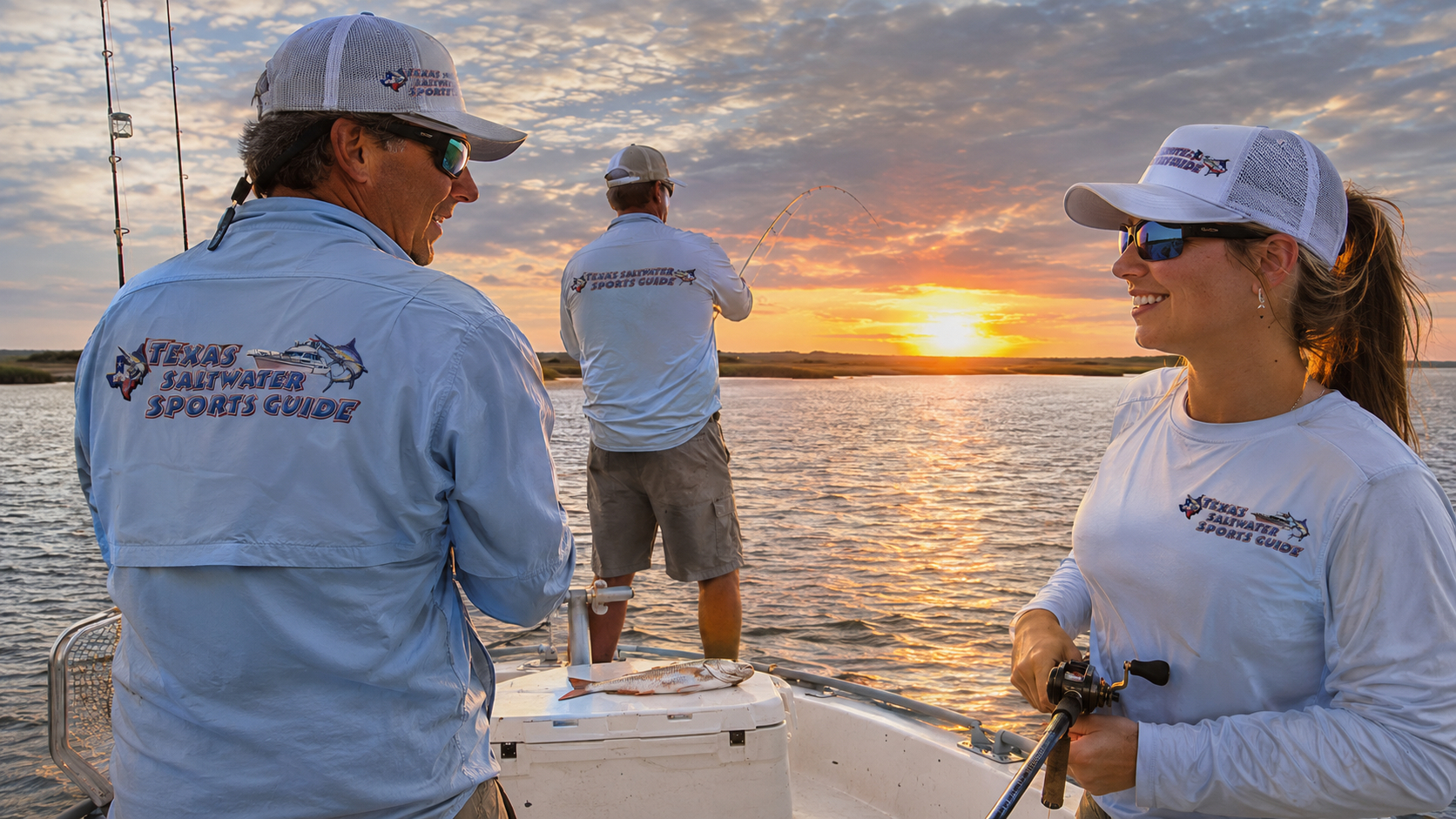
The Financial Impact of Saltwater Fishing Sport in Texas: More Than Fish on the End of a Line A Billion-Dollar Coastal Tradition
There's something about a Texas coastal fishing town before sunrise that tells you everything you need to know about the importance of saltwater fishing.
The coffee is brewing at the convenience store. Pickup trucks pulling bay boats are lined up at the fuel pumps. Bait camp lights are glowing along the waterfront. A fishing guide is loading ice into his boat while a family from San Antonio checks into a motel after arriving late the previous evening.
Somewhere, a restaurant owner is preparing for the breakfast crowd, and a marine mechanic is already thinking about the Yamaha outboard waiting in his shop.
And nobody has caught a fish yet.
That's the remarkable thing about recreational saltwater fishing in Texas.
The economic activity begins long before the first cast and continues long after the last boat is back on its trailer.
I've spent enough years around fishing, boats, tournaments, guides and outdoor publishing to appreciate that fishing is much more than a recreational pastime. It is an industry that supports working families, creates businesses, generates tax revenue and gives coastal communities a reason to thrive.
From Sabine Lake to South Padre Island, Texas saltwater fishing supports an enormous network of businesses and jobs.
And the numbers may surprise you.
How Much Money Does Saltwater Fishing Generate in Texas?
According to Texas Sea Grant, recreational saltwater fishing generates more than $1 billion in annual economic impacts in Texas.
The organization describes an industry involving more than 400,000 licensed recreational saltwater anglers, approximately 1,500 licensed fishing guides and hundreds of fishing tournaments.
That economic activity includes boat purchases, fishing equipment, tackle, bait, fuel, charter fees and other fishing-related expenses.
The Texas Sea Grant estimate provides an important indication of the industry's scale, although it should not be treated as a precise 2026 annual revenue total.
Historical studies provide additional perspective.
A Texas Parks and Wildlife economic analysis estimated that saltwater anglers generated approximately $981 million in retail sales and $1.79 billion in total economic output in 2006, supporting more than 18,500 jobs.
A later NOAA study estimated that marine recreational fishing trips in Texas generated approximately $377 million in sales impacts in 2017, supporting nearly 3,000 jobs. That study used a narrower trip-expenditure framework, so the two figures are not directly comparable.
The distinction matters.
Some studies count direct spending. Others include supply-chain activity, employee spending, durable equipment and economic multiplier effects.
The numbers differ because the economic boundaries differ, not necessarily because fishing suddenly became more or less important.
The central conclusion remains the same.
Recreational saltwater fishing is a substantial contributor to the Texas coastal economy.
Texas Saltwater Fishing Economic Impact at a Glance
|
Economic measure |
Reported figure |
Reference period |
|---|---|---|
|
Texas recreational saltwater fishing economic impact |
Over $1 billion annually |
Texas Sea Grant estimate |
|
Texas saltwater fishing retail sales |
$981 million |
TPWD study, 2006 |
|
Texas saltwater fishing total economic output |
$1.79 billion |
TPWD study, 2006 |
|
Jobs supported by Texas saltwater fishing |
18,542 |
TPWD study, 2006 |
|
Texas marine fishing trip-related sales impact |
$377 million |
NOAA study, 2017 |
|
Texas marine fishing trip-related jobs |
2,973 |
NOAA study, 2017 |
|
Texas recreational boating economic impact |
$11.8 billion |
NMMA study, 2023 |
The recreational boating figure includes freshwater boating and other boating activities. It is not a saltwater fishing-only estimate and should not be added to the other figures.
Still, it demonstrates how important boating has become to the larger Texas economy.
The Ripple Effect of One Texas Saltwater Fishing Trip
Imagine four fishermen leaving Houston for a three-day trip to Port O'Connor.
They aren't planning an extravagant vacation.
They simply want a few days chasing speckled trout and redfish around Espiritu Santo Bay.
Before they ever launch the boat, they have already spent money on gasoline, lodging, food, ice, bait and fishing supplies.
Let's consider a hypothetical trip budget.
|
Expense |
Three-day trip |
|---|---|
|
Lodging, two rooms for two nights |
$600 |
|
Restaurants and groceries |
$400 |
|
Vehicle fuel |
$150 |
|
Boat fuel |
$180 |
|
Live bait, ice and terminal tackle |
$150 |
|
Launching and miscellaneous expenses |
$70 |
|
Total trip spending |
$1,550 |
These are illustrative amounts, not surveyed statewide averages.
That works out to $387.50 per fisherman for the trip.
Now imagine hundreds of similar fishing parties visiting Texas coastal communities throughout the year.
Suddenly those motel rooms, restaurant tables and fuel pumps become a very important part of the local economy.
And that's before we consider boat purchases, annual insurance, maintenance, storage, electronics or the thousands of dollars many fishermen invest in tackle.
Food and Lodging: The Fishing Tourism Economy
Hotels, Motels and Vacation Rentals
One of the most direct financial benefits of recreational saltwater fishing is overnight tourism.
Many Texas coastal communities depend heavily on visiting fishermen, particularly during spring, summer and fall.
Consider destinations such as:
-
Galveston
-
Freeport
-
Port O'Connor
-
Rockport
-
Aransas Pass
-
Port Aransas
-
Corpus Christi
-
Port Mansfield
-
South Padre Island
Each offers accommodations ranging from modest fishing motels to waterfront vacation homes, fishing lodges and resort properties.
A group of fishermen might rent a small house for several days because it provides room for boats, coolers, tackle and family members.
Others prefer a motel close to the marina.
Families may combine fishing with beach activities, shopping, birdwatching and dining.
The financial benefits extend well beyond the room charge.
Lodging businesses employ housekeepers, maintenance workers, office staff and property managers.
They purchase cleaning supplies, linens, furniture, appliances and building materials.
They pay utilities, insurance and property taxes.
Local contractors maintain air-conditioning systems, plumbing and electrical equipment.
One occupied motel room supports a surprisingly long chain of businesses.
Restaurants and Coastal Dining
Fishing and eating have always enjoyed a particularly close relationship.
A fisherman may spend all morning trying to catch a speckled trout and then happily order fried shrimp for lunch.
Restaurants benefit from visiting anglers and their families, particularly during tournaments and busy fishing weekends.
The economic activity reaches suppliers of seafood, meat, vegetables, beverages, kitchen equipment and restaurant services.
It also supports cooks, servers, dishwashers and delivery drivers.
NOAA's Texas marine recreational fishing expenditure research illustrates the importance of food and lodging.
In its 2017 analysis, average spending per angler-day was estimated at approximately:
-
$428 for guided or for-hire fishing trips
-
$177 for private or rental boat fishing
-
$156 for shore fishing
For guided trips, lodging averaged about $79 per angler-day, while restaurant spending averaged approximately $61.
These figures are historical survey estimates, not current prices, but they show that food and lodging represent substantial portions of coastal fishing expenditures.
And remember, the money doesn't stop at the restaurant door.
Employees take their wages home and spend them in the community.
That's part of what economists call the induced economic effect.
Saltwater Boat Sales: One of the Largest Financial Investments in Fishing
If there's one thing I've learned after decades around fishing boats, it's that buying the boat is only the beginning.
Texas fishermen have a remarkable selection of vessels designed for everything from shallow-water redfish fishing to offshore billfish tournaments.
Popular categories include:
-
Flats skiffs
-
Shallow-draft bay boats
-
Center-console fishing boats
-
Offshore sportfishing boats
-
Fishing kayaks
-
Dual-purpose family fishing boats
A fisherman might begin with a used aluminum boat, graduate to a shallow-running bay boat and eventually purchase a larger center console.
Each purchase creates economic activity.
How Much Does a Saltwater Fishing Boat Cost?
Boat prices vary dramatically with hull size, construction, propulsion, electronics and equipment.
For illustration, typical market categories can span:
|
Boat category |
Illustrative purchase range |
|---|---|
|
Fishing kayak |
$800–$4,000+ |
|
Small flats skiff |
$20,000–$60,000+ |
|
20–24-foot bay boat |
$50,000–$120,000+ |
|
25–30-foot center console |
$100,000–$300,000+ |
|
Large offshore sportfishing boat |
Several hundred thousand to millions |
These are broad examples rather than verified 2026 transaction averages.
A new bay boat purchase may generate revenue for the manufacturer, dealer, engine supplier, trailer manufacturer, electronics companies and financing providers.
Sales taxes and registration-related fees add another financial dimension.
Then comes the equipment.
A trolling motor.
GPS/chartplotter.
Marine radio.
Shallow-water anchors.
Batteries.
Rod holders.
Safety equipment.
By the time a fisherman finishes rigging his new boat, he may have supported a dozen different businesses.
Our Texas Saltwater Fishing Guide's boat and fishing equipment resources cover many of the products and services that keep this industry moving.
The Broader Texas Recreational Boating Economy
The National Marine Manufacturers Association reported that Texas recreational boating generated approximately $11.8 billion in annual economic impact and supported more than 38,000 jobs in its 2023 study.
Texas ranked third nationally in recreational boating economic impact.
That includes far more than saltwater fishing boats.
Freshwater bass boats, pleasure boats, personal watercraft and other recreational boating activities are included.
Nevertheless, the scale of the industry illustrates why boat sales and marine services are so important to Texas.
Saltwater Boat Manufacturing and Texas Jobs
A fishing boat may look like a finished product sitting in a showroom, but behind that polished gelcoat is an entire manufacturing economy.
Boatbuilding requires skilled workers in:
-
Fiberglass and composite construction
-
Hull and deck assembly
-
Electrical installation
-
Plumbing and livewell systems
-
Upholstery
-
Metal fabrication
-
Quality control
-
Engine installation
-
Trailer production
-
Engineering and design
Manufacturers purchase fiberglass materials, resins, hardware, electrical components, pumps, steering systems and electronics.
Those purchases support additional suppliers.
Texas has a longstanding boatbuilding tradition, including companies associated with shallow-water fishing and bay-boat construction.
Manufacturers such as Shallow Sport and Shoalwater are examples of the state's specialized shallow-water boatbuilding heritage.
Not every boat purchased by a Texas fisherman is built in Texas, of course.
A Skeeter, Pathfinder, Yellowfin or other brand may involve production facilities and suppliers outside the state.
But even when a boat is manufactured elsewhere, the Texas dealer, rigging shop, service department and local marine businesses still participate in the sale and ownership cycle.
Boat Manufacturing Creates More Than Factory Jobs
Consider a new bay boat leaving the factory.
It needs transportation to the dealer.
The dealer may install additional electronics.
A technician prepares the engine.
A bank or finance company may arrange financing.
An insurance company provides coverage.
The buyer purchases a trailer hitch, spare propeller, safety equipment and accessories.
The boat may then spend the next fifteen or twenty years requiring maintenance, replacement equipment and occasional repairs.
The manufacturing economy creates the product.
The ownership economy keeps generating business long afterward.
A separate, current statewide revenue total specifically for Texas-built saltwater fishing boats is not readily available in the published studies cited here. It would be misleading to assign the entire Texas recreational boatbuilding industry to saltwater fishing.
The Saltwater Fishing Tackle Industry
Now we're getting into a subject fishermen understand particularly well.
Tackle.
I've never met many serious fishermen who believed they owned too many rods.
They may admit to having more than they can use at one time, but that's an entirely different question.
Saltwater tackle represents a substantial and recurring source of revenue.
Unlike a boat, which may be purchased every several years, tackle purchases continue throughout the fishing season.
Rods and Reels
Texas saltwater fishermen purchase spinning rods, casting rods, fly rods, conventional offshore tackle and specialized equipment for particular species.
A trout fisherman may prefer a sensitive medium-light spinning rod.
A redfish fisherman may carry several medium or medium-heavy outfits.
An offshore angler may invest in heavy conventional tackle costing hundreds or thousands of dollars per outfit.
Every purchase supports manufacturers, distributors and retailers.
Artificial Lures
The lure business is particularly interesting because fishermen continually replace and experiment with products.
Popular categories include:
-
Soft plastic paddle tails
-
Topwater plugs
-
Suspending twitchbaits
-
Spoons
-
Jigs
-
Bucktails
-
Offshore trolling lures
-
Flounder baits
-
Fly-fishing flies and materials
Texas coastal fishermen have helped support an entire culture of lure development and small tackle businesses.
Local knowledge influences product design.
A lure that performs well over shallow Laguna Madre grass may require a different hook arrangement or weight than one intended for deep Galveston Bay shell.
Those differences create opportunities for specialized manufacturers.
Fishing Line, Hooks and Terminal Tackle
Braided line, fluorocarbon leaders, hooks, swivels, weights and popping corks are recurring purchases.
They may not attract the attention of a new center-console boat, but collectively they represent a dependable stream of retail sales.
How Much Revenue Does Saltwater Tackle Generate in Texas?
The American Sportfishing Association estimated that all recreational fishing in Texas, freshwater and saltwater combined, involved approximately $4.6 billion in angler spending in 2021, supporting a broader economic output of about $7.7 billion.
Those are impressive figures, but they cannot accurately be described as saltwater tackle sales.
The published summary does not isolate a reliable current Texas saltwater-only tackle revenue total.
The important distinction is that tackle is one component of a much larger fishing economy that includes boats, transportation, food, lodging and other expenditures.
Fishing Guides and Charter Boats: Small Businesses With a Big Influence
A good fishing guide is much more than someone who knows where the fish are.
He is a boat operator, mechanic, weather observer, teacher, customer-service representative and small-business owner.
Some days he's also a marriage counselor, particularly when one spouse catches all the fish.
Texas Sea Grant identifies approximately 1,500 licensed fishing guides associated with the state's recreational saltwater fishing industry.
Guides support local economies through fuel purchases, bait, boat maintenance, insurance, tackle, advertising and customer referrals.
A visiting fishing party may book a guide for one day and remain in town for three.
That creates additional spending on lodging, meals and entertainment.
Charter Fishing Revenue
For-hire fishing businesses range from shallow-water bay guides to large offshore charter operations.
The revenue structure varies with vessel size, trip length, crew requirements and fuel consumption.
A half-day bay trip has a very different cost structure from a full-day offshore trip.
Larger offshore vessels may consume substantial quantities of fuel and require more expensive equipment, insurance and maintenance.
The charter fee must cover far more than the captain's time.
And while guides are often among the most visible faces of the industry, their economic importance extends to the many businesses serving them.
Fishing Licenses, Endorsements and Permit Revenue
Fishing licenses are one of the most direct ways anglers financially support Texas fisheries.
Texas Parks and Wildlife requires most anglers fishing public saltwater to hold an appropriate fishing license and saltwater endorsement, subject to applicable exemptions.
For the current published license schedule, examples include:
|
License or package |
Fee |
|---|---|
|
Resident saltwater fishing package |
$35 |
|
Nonresident saltwater fishing package |
$63 |
|
Senior resident saltwater package |
$17 |
|
Resident all-water package |
$40 |
|
Nonresident all-water package |
$68 |
|
Resident one-day all-water license |
$11 |
|
Nonresident one-day all-water license |
$16 |
The separate saltwater endorsement is listed at $10 for eligible anglers purchasing it in addition to another license.
The complete package price includes more than the endorsement itself.
That distinction matters when estimating revenue.
How Much Does Texas Collect From Fishing Licenses?
Texas Parks and Wildlife reported approximately $114 million in total hunting and fishing license revenue for license year 2025 in a January 2026 commission financial presentation.
That amount includes hunting and fishing license categories, not saltwater fishing alone.
Consequently, it should not be presented as saltwater license revenue.
To determine the precise saltwater share, we would need current TPWD sales quantities and receipts broken down by package and endorsement type, including all-water and combination licenses.
Even without a complete saltwater-only total, license sales clearly represent a meaningful conservation funding stream.
What Do Fishing License Dollars Support?
License revenue helps fund fisheries conservation and the public infrastructure needed to manage fishing opportunities.
Related activities include:
-
Fisheries research
-
Fish population monitoring
-
Habitat conservation
-
Law enforcement
-
Public access
-
Fisheries management
-
Education
-
Stocking and hatchery programs where applicable
A fishing license is more than permission to catch fish.
It is an investment in keeping the resource available.
Federal Excise Taxes and Fisheries Conservation
There is another source of fishing-related revenue that many anglers rarely think about.
Federal excise taxes on qualifying fishing equipment and motorboat fuel help support aquatic conservation through the Sport Fish Restoration program.
The program is often associated with the Dingell-Johnson Act and later Wallop-Breaux amendments.
These funds help states finance eligible fisheries management, habitat, boating access and aquatic education activities.
When a fisherman buys certain tackle or pays for motorboat fuel, part of the broader tax system can ultimately help support recreational fisheries.
This creates an important connection between the fishing industry and conservation.
Healthy fisheries attract anglers.
Anglers purchase equipment.
Equipment-related taxes help fund fisheries programs.
Those programs help maintain the resource upon which the industry depends.
It is one of the better examples of recreational users contributing financially to the future of their own sport.
Marine Fuel, Marinas and Boat Maintenance
A boat without fuel isn't much more than an expensive floating patio.
Marine fuel is one of the most dependable recurring expenses associated with recreational saltwater fishing.
A small bay boat may use relatively little fuel during a short trip.
A larger offshore center console traveling fifty miles into the Gulf and back can consume considerably more.
Fuel purchases support marina operators, fuel distributors, transportation companies and local retailers.
Marina Revenue
Marinas earn revenue through several different services.
Wet slips, dry storage, launching fees, fuel sales, electricity, water, boat cleaning and equipment rentals all contribute to the marine economy.
Some marinas also operate bait shops, restaurants, convenience stores and repair facilities.
Others specialize in long-term boat storage.
For coastal communities, marinas serve as economic gathering points where multiple businesses benefit from the same customers.
Boat Repair and Maintenance
Saltwater is wonderfully productive for fishing and remarkably unforgiving to machinery.
Engines require regular service.
Electrical connections corrode.
Trailer bearings wear.
Batteries fail.
Pumps stop pumping.
Propellers occasionally encounter oyster reefs that were apparently placed in the wrong location.
Marine mechanics, fiberglass repair shops, propeller specialists and trailer service businesses all benefit from ongoing boat ownership.
A new boat sale is an important transaction.
Keeping that boat operating for the next twenty years can produce an equally interesting stream of business.
Fishing Tournaments and Coastal Events
Texas saltwater fishing tournaments are more than competitions.
They are economic events.
From redfish tournaments to offshore billfish competitions, organized fishing brings participants, spectators, sponsors and families into coastal communities.
Tournament spending may include entry fees, fuel, accommodations, food, bait, tackle, boat repairs and entertainment.
Larger events may attract fishermen from other states.
The Economic Influence of Tournament Fishing
Consider a tournament attracting 100 fishing teams.
Suppose each team spends an illustrative $1,500 locally on lodging, meals, fuel and supplies.
That represents $150,000 in direct visitor spending.
The calculation doesn't include tournament organization, sponsorship, prizes or longer-term marketing benefits.
Of course, not every tournament attracts 100 teams or produces that level of spending.
The example simply illustrates how organized fishing can generate substantial local activity over a single weekend.
Texas Sea Grant reports that hundreds of saltwater sportfishing tournaments take place in Texas annually.
For some smaller coastal communities, a successful tournament weekend can be particularly valuable during slower tourism periods.
Coastal Tourism: From Galveston to South Padre Island
The financial impact of recreational fishing is spread across the Texas coastline, but each region has its own economic character.
Galveston and the Upper Texas Coast
Galveston benefits from a combination of bay fishing, offshore charters, beaches, hotels, restaurants and year-round tourism.
The fishing economy overlaps with a much larger coastal visitor economy.
Families may visit for fishing and spend additional money on attractions, shopping and entertainment.
Our Speckled Trout Fishing in Galveston Bay Texas guide explores one of the region's signature recreational fisheries.
Matagorda, Port O'Connor and the Middle Coast
Port O'Connor and surrounding communities have a particularly strong connection to fishing and boating.
Bay fishing, offshore trips, guides, bait camps and marinas play an important role in the area's economy.
Visitors targeting redfish, trout and flounder support local lodging and services.
Our Espiritu Santo Bay Texas Saltwater Fishing Guide highlights the recreational opportunities that attract anglers to this relatively undeveloped portion of the coast.
Rockport, Aransas Pass and Port Aransas
The Coastal Bend supports an extensive fishing economy.
Guide services, boat dealerships, marinas, tackle stores and vacation accommodations serve anglers throughout the year.
Port Aransas also benefits from offshore fishing and major fishing events.
Rockport and Aransas Pass provide access to productive bay systems and have long traditions of recreational boating.
The Aransas Bay Texas Saltwater Fishing Guide offers a closer look at one of the region's most important fishing destinations.
Corpus Christi and the Laguna Madre
Corpus Christi supports a diverse recreational marine economy that includes fishing, boat sales, repairs, charter services and tourism.
Farther south, the Laguna Madre attracts fishermen interested in shallow-water redfish, speckled trout and sight fishing.
The specialized nature of that fishing encourages investment in shallow-draft boats, kayaks, trolling motors and lightweight tackle.
Our How to Catch Redfish on the Laguna Madre article explores the fishery that helps attract visitors and sustain local fishing businesses.
South Padre Island and Port Isabel
South Padre Island combines fishing tourism with beach vacations, boating, restaurants and accommodations.
Port Isabel serves as an important marine-service and fishing center.
The region attracts anglers interested in bay fishing, offshore fishing and seasonal opportunities for larger Gulf species.
Our Fly Fishing South Padre Island Texas guide illustrates another specialized fishing activity that contributes to the local tourism economy.
Other Revenue Streams Supported by Texas Saltwater Fishing
The financial influence of recreational fishing extends into industries that don't always appear in fishing-related economic reports.
Marine Electronics
Modern fishing boats may carry thousands of dollars in electronics.
Chartplotters, sonar units, radar, VHF radios, trolling motors and navigation systems generate revenue for manufacturers, retailers and installation specialists.
Software subscriptions, electronic charts and replacement equipment add recurring revenue.
Insurance and Financing
Boat insurance, financing and related financial services are part of the recreational marine economy.
These businesses earn premiums, interest and service fees while helping customers purchase and protect expensive equipment.
Boat Storage and Real Estate
Many fishermen need storage facilities for boats and trailers.
Some purchase coastal property specifically because they want convenient fishing access.
Others rent waterfront houses or purchase homes with boat slips.
Fishing may therefore influence real estate demand, property maintenance and local construction activity.
However, not every waterfront property transaction should be counted as fishing-generated revenue.
Transportation and Vehicle Sales
Boating creates demand for tow vehicles, trailers, tires, maintenance and accessories.
A fisherman who buys a pickup primarily to tow a bay boat contributes to a larger transportation economy.
But the entire value of that vehicle shouldn't automatically be assigned to fishing if it also serves everyday transportation needs.
Advertising and Outdoor Media
Fishing supports magazines, websites, videos, television programs, social media channels and advertising businesses.
Manufacturers advertise their products.
Fishing guides promote their services.
Tourism organizations publicize coastal destinations.
Outdoor publications provide information that helps anglers plan trips and select equipment.
The Texas Saltwater Fishing Guide is part of that tradition, connecting fishermen with fishing reports, destinations, equipment and coastal businesses.
Public Infrastructure and Government Revenue
Recreational fishing also generates revenue through applicable sales taxes, fuel taxes, hotel occupancy taxes, boat-related fees and business taxes.
Local governments use various revenue sources to support public services and infrastructure.
Fishing-related visitor spending can contribute to that tax base.
But tax receipts are not the same as economic output, and they shouldn't be added indiscriminately to spending figures.
How Fishing Reports Help the Texas Coastal Economy
Texas Parks and Wildlife fishing reports provide more than information about where fish are biting.
They help anglers make decisions about when and where to travel.
A favorable report from Galveston Bay may encourage a Houston fisherman to schedule a weekend trip.
A report describing good redfish action around Port O'Connor may prompt another group to book a guide.
Information about speckled trout around Corpus Christi or seasonal flounder movement near Gulf passes can influence fishing plans.
Those decisions translate into spending.
The Texas Parks and Wildlife saltwater fishing reports also provide a valuable picture of the relationship between weather, habitat, seasons and fishing success.
Healthy fisheries create recreational opportunities.
Reliable information helps fishermen take advantage of them.
And when anglers travel, coastal businesses benefit.
Why Fisheries Conservation Is an Economic Investment
Here's something worth remembering.
You cannot build a lasting recreational fishing economy around fish that no longer exist.
Healthy redfish, speckled trout, flounder and offshore fisheries are the foundation upon which the industry depends.
If fish populations decline severely, anglers may reduce trips, change destinations or stop participating.
That affects guides, bait camps, lodging, restaurants and tackle retailers.
Texas Parks and Wildlife fisheries management therefore has economic consequences far beyond the biological health of fish populations.
Protecting Redfish and Speckled Trout
Texas has a long history of managing recreational redfish and trout fisheries through regulations, monitoring and habitat programs.
Changes in fish populations can influence angler participation and spending.
A productive bay may attract fishermen from hundreds of miles away.
A declining fishery can reduce that attraction.
Flounder Conservation
Southern flounder conservation provides another example.
Management measures intended to protect spawning fish are designed to improve the long-term sustainability of the fishery.
The immediate effect of a closure may reduce some fishing opportunities.
The longer-term goal is to protect the resource that supports future fishing activity.
Good fisheries management must consider biological sustainability and the communities that depend upon fishing.
Coastal Habitat Protection
Oyster reefs, marshes, seagrass beds and freshwater inflows support the food chains upon which recreational fisheries depend.
Protecting these habitats is not simply an environmental concern.
It is also an economic concern.
Healthy habitat supports healthy fisheries.
Healthy fisheries support fishing activity.
And fishing activity supports coastal businesses.
What Threatens the Texas Saltwater Fishing Economy?
Like any industry, recreational fishing faces challenges.
Hurricanes can damage marinas, boat ramps, lodging and coastal infrastructure.
Rising insurance and construction costs can make rebuilding difficult.
Fuel prices influence how often fishermen travel and how far offshore boats operate.
Boat prices and financing costs can affect new purchases.
Changes in water quality, salinity, habitat and fish populations can influence fishing success.
Fishing businesses also face workforce challenges, seasonal fluctuations and competition from other recreational activities.
Smaller coastal businesses may be particularly vulnerable because their customer base depends heavily on favorable weather and seasonal visitation.
These are reasons to pay attention to the economic health of recreational fishing, not reasons to doubt its importance.
The Future of Recreational Saltwater Fishing in Texas
Texas has several advantages that should continue supporting recreational saltwater fishing.
The state has a large population, an extensive coastline, productive bays, major metropolitan areas within driving distance of the coast and a deeply established fishing culture.
Technological improvements in boats, electronics and fishing equipment continue to create new opportunities.
Kayak fishing has expanded access for anglers who don't want the expense of a large boat.
Modern shallow-draft vessels allow fishermen to explore waters that were difficult to reach with older hull designs.
Fishing websites and digital mapping help visitors discover new destinations.
And conservation programs provide tools for maintaining the fisheries upon which the industry depends.
The greatest long-term opportunity may be introducing younger generations to fishing.
A child who catches a first redfish today may become tomorrow's fishing guide, marine mechanic, boatbuilder, fisheries biologist or small-business owner.
Or perhaps simply another lifelong fisherman who supports the industry through recreational spending.
Either way, the future begins with participation.
What Is the True Financial Impact of Saltwater Fishing Sport in Texas?
The most responsible answer is that Texas recreational saltwater fishing generates well over a billion dollars in economic activity according to Texas Sea Grant's published industry estimate, while broader boating and all-species recreational fishing activities contribute billions more to the state's economy.
But those broader figures overlap.
They cannot simply be added together to produce a legitimate saltwater fishing total.
A complete contemporary estimate would need to account for direct angler expenditures, saltwater-specific durable goods, guide and charter operations, manufacturing, distribution, employment and economic multiplier effects without counting the same transaction twice.
That is a substantial research undertaking.
Nevertheless, the available studies establish that saltwater fishing is much more than a pleasant way to spend a weekend.
It supports businesses, employment, tourism, manufacturing, conservation and public revenue throughout Texas.
And unlike some industries, its economic influence reaches from major metropolitan dealerships and manufacturing facilities to small bait camps beside isolated coastal marshes.
Final Thoughts: The Value of a Texas Fishing Trip
When I think about the financial impact of recreational saltwater fishing, I don't immediately picture charts, graphs or billion-dollar estimates.
I picture a little bait camp before sunrise.
An old fisherman buying a dozen live shrimp.
A young guide checking his outboard before his customers arrive.
A couple from Dallas unloading luggage at a Rockport motel.
A mechanic opening his shop in Aransas Pass.
A waitress pouring coffee for a table of fishermen who have been telling the same fishing stories for twenty years.
And somewhere, a father helping his daughter make her first cast along a quiet Texas shoreline.
That's the real economy of fishing.
Certainly, the numbers matter.
They help lawmakers, business owners and conservation organizations understand the importance of recreational fishing.
They help justify investments in boat ramps, public access, fisheries research and coastal infrastructure.
They demonstrate that fishing is not merely a hobby enjoyed by a handful of enthusiasts.
It is an established economic activity that supports thousands of Texans.
But there is something those numbers cannot fully measure.
The friendships.
The family traditions.
The quiet mornings.
The excitement of a child's first fish.
The sense of freedom that comes from pushing away from a dock before sunrise.
I've been fortunate enough to spend much of my life around fishing, and one thing has never changed.
The people who make their living serving fishermen are often fishermen themselves.
They understand the attraction.
They know why somebody will drive four hours, spend money on gasoline, rent a room and get out of bed at four in the morning just for the possibility of catching a fish.
Because they would probably do the same thing.
That's what makes this industry unusual.
The customer and the business owner frequently share the same passion.
And perhaps that's why the Financial Impact of Saltwater Fishing Sport in Texas reaches so far beyond the dollars recorded in an economic report.
Every fishing trip supports a network of people and businesses that help keep the Texas coastal fishing tradition alive.
The next time you ease a bay boat away from the dock, think about all the hands that helped make that morning possible.
The boatbuilder.
The mechanic.
The tackle manufacturer.
The bait dealer.
The marina operator.
The motel owner.
The people working to conserve the fishery.
They're all part of the experience.
Then point the bow toward the sunrise, lower the trolling motor and make that first cast.
Somewhere beneath the surface, a speckled trout or redfish may be waiting.
And somewhere back on shore, a whole lot of hardworking Texans are making a living because fishermen like us still love to go fishing.
That's an industry worth understanding, supporting and preserving for the generations that follow.
0 Comments