
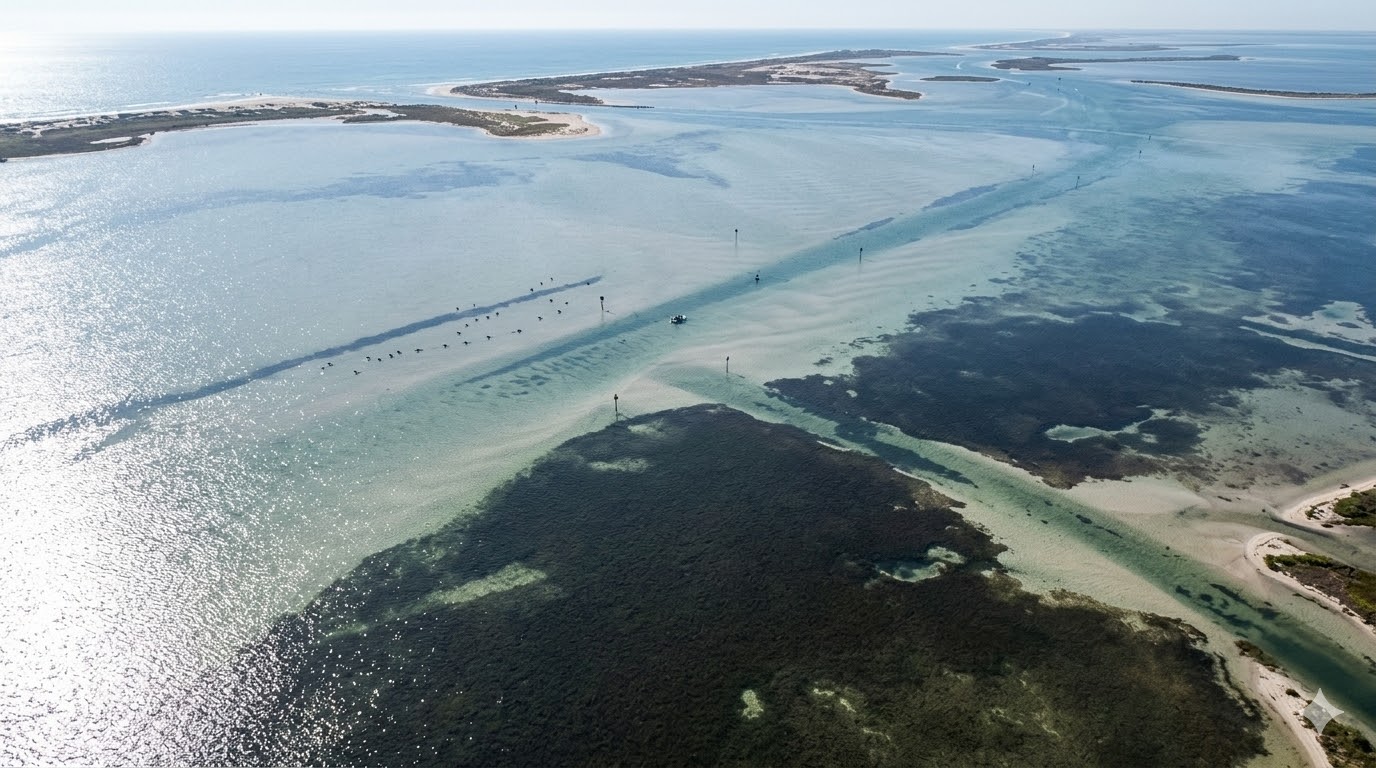
Along the long sweep of the Texas Gulf Coast lies one of the most legendary shallow-water fisheries in North America—the Laguna Madre. Stretching more than 130 miles from Corpus Christi down to South Padre Island, this remarkable bay system is a place where the water is shallow, the horizon is wide, and the fishing can be extraordinary.
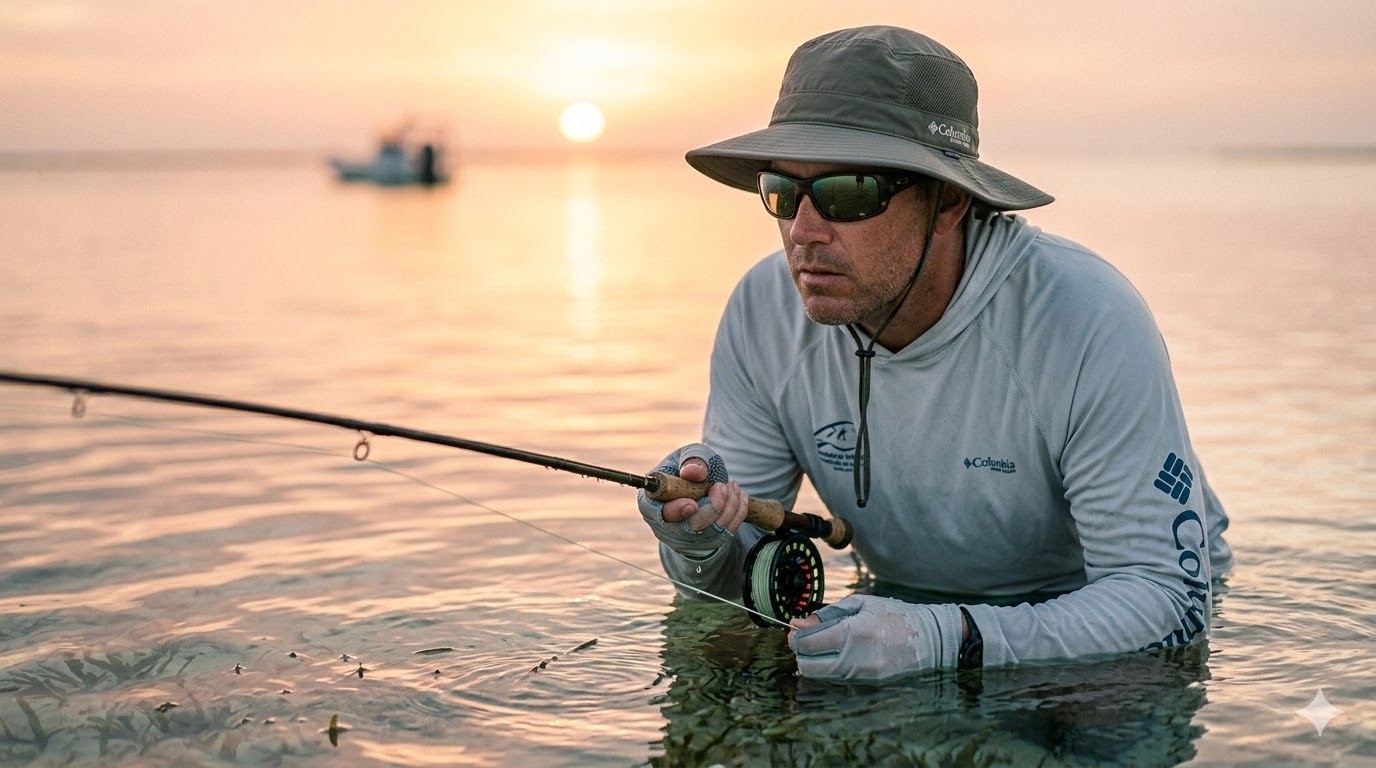
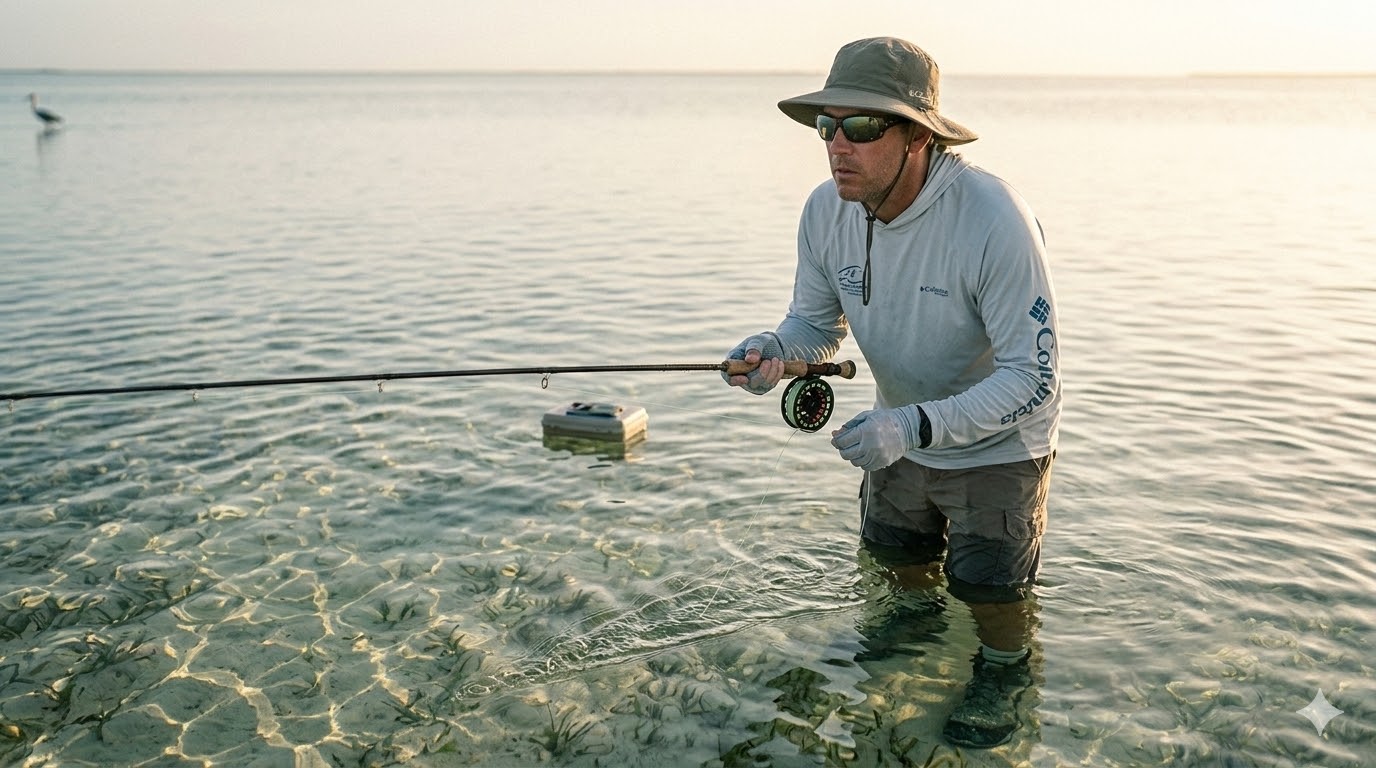
For generations of coastal anglers, fishing the Laguna Madre has meant stepping out of the boat, easing quietly into clear water, and stalking fish across grass flats and sand bars. Wade fishing here is not just a technique—it’s a tradition. It connects anglers to the water in a way that few other forms of fishing can.
The Laguna Madre is famous for its sight-fishing opportunities, trophy speckled trout, and powerful redfish. Because much of the bay averages only a few feet deep, anglers can walk for miles across firm sand and grass flats while searching for cruising fish.
For those who appreciate the slower pace of traditional coastal fishing, few experiences compare to watching the sunrise over the flats, feeling the Gulf breeze on your face, and casting toward a tailing redfish in water barely deep enough to cover your boots.
This guide explores everything you need to know about wade fishing the Laguna Madre—from its geography and species to tackle, seasonal patterns, and proven techniques that have worked for Texas anglers for decades.
Understanding the Laguna Madre
The Laguna Madre is unique among North American estuaries. In fact, it is one of only a handful of hypersaline lagoons in the world. Shallow depths, limited tidal exchange, and warm Texas sun combine to create water that is often saltier than the Gulf of Mexico.
The bay system is typically divided into two sections:
-
Upper Laguna Madre – near Corpus Christi and Baffin Bay
-
Lower Laguna Madre – stretching from Port Mansfield to South Padre Island
Both regions are famous for shallow grass flats, scattered sand pockets, and an abundance of baitfish.
Along the edges of the bay, wide sand flats often measure only 6 inches to 1 foot deep before dropping into deeper grass beds, creating ideal feeding zones for redfish and trout.
This structure—shallow feeding flats adjacent to slightly deeper travel lanes—is the foundation of successful fishing in the Laguna Madre.
Why Wade Fishing Works So Well
Many saltwater anglers fish from boats, drifting across flats or anchoring along channels. But in the Laguna Madre, wade fishing offers one critical advantage: stealth.
In clear, shallow water, fish can detect noise and vibration easily. Approaching fish with a boat often spooks them before a cast is made. By stepping out of the boat and walking quietly across the flats, anglers can approach feeding fish with far less disturbance.
That stealth is one reason wade fishing has remained popular for generations of Texas coastal fishermen.
Advantages of wade fishing include:
Stealth
Walking slowly through the water allows anglers to approach schools of fish without engine noise or hull slap.
Better Casting Angles
Being at water level gives anglers a natural casting presentation.
Sight Fishing Opportunities
Clear water allows anglers to spot tails, wakes, and shadows.
Access to Skinny Water
Some of the best areas are too shallow for boats.
For many anglers, wade fishing is also simply more enjoyable. Standing waist-deep in clear coastal water with nothing but sky and grass flats around you is hard to beat.
The Main Game Fish of the Laguna Madre
One reason the Laguna Madre is so famous is the quality and variety of inshore fish species available.
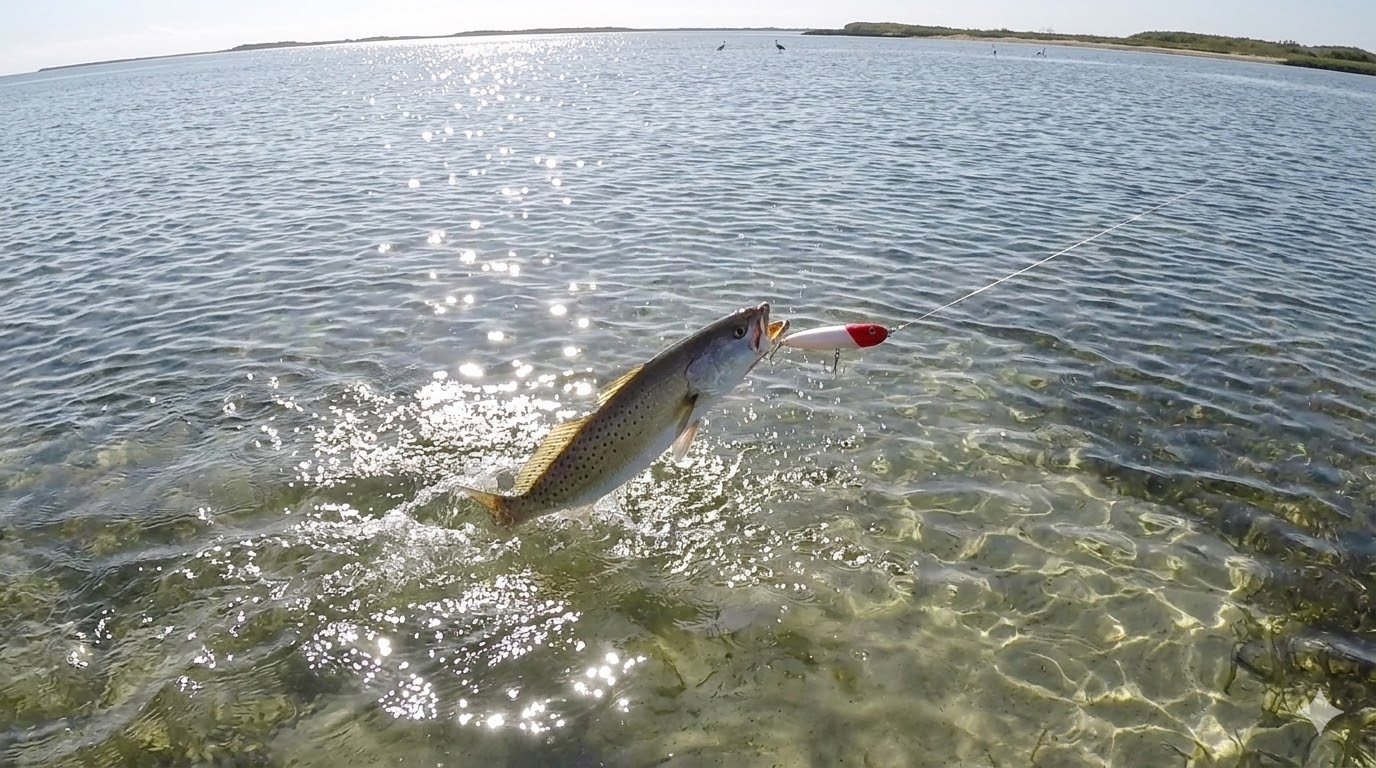
Speckled Trout
Speckled trout are arguably the most sought-after species in the Laguna Madre. The bay system has produced some of the largest trout ever caught along the Texas coast.
These fish patrol grassy flats, sand potholes, and drop-offs where baitfish congregate.
Early morning is prime time, when trout move into shallow water to hunt mullet and pinfish.
Large trout—often called “gator trout”—can exceed 7 or 8 pounds and are legendary among Texas anglers.
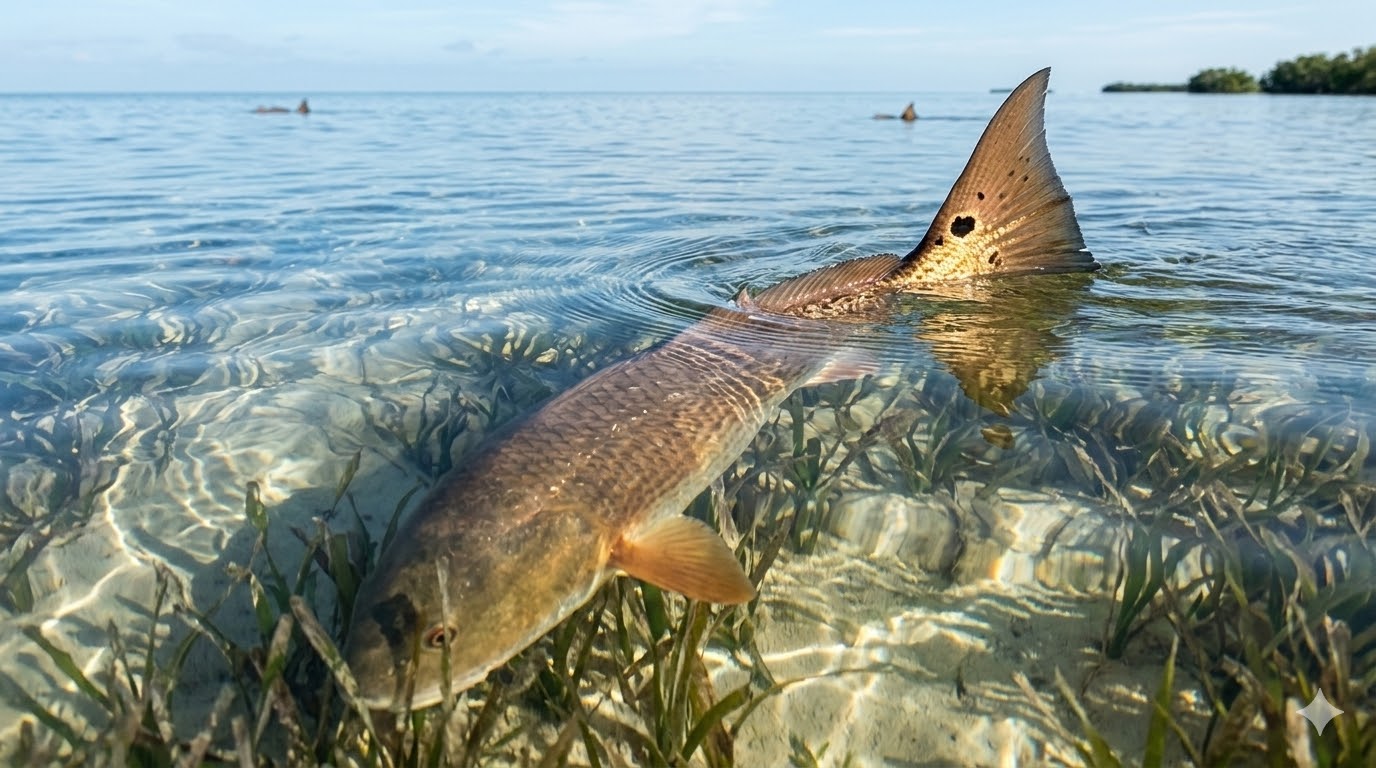
Redfish
Redfish thrive in shallow coastal bays, and the Laguna Madre may be one of the best redfish fisheries anywhere in the Gulf.
Slot redfish measuring 20 to 28 inches are common across the flats.
Redfish are easily recognized by:
-
Copper-colored bodies
-
Distinct tail spots
-
Tailing behavior while feeding
Watching a redfish tip its tail out of the water while rooting in the grass is one of the most exciting sights in saltwater fishing.
Flounder
Flounder are another prized catch when fishing the Laguna Madre.
These flatfish lie camouflaged along sandy bottoms and drop-offs, waiting to ambush baitfish. Anglers often catch them while targeting trout and redfish, though dedicated flounder fishermen work jigs slowly along the bottom near channels.
Other Species
Additional fish commonly caught in the Laguna Madre include:
-
Black drum
-
Sheepshead
-
Ladyfish
-
Snook (especially near South Bay)
This diversity makes the lagoon a year-round fishing destination.
Best Seasons for Fishing the Laguna Madre
While fishing is productive year-round, seasonal patterns influence fish behavior.
Spring
Spring brings warming water temperatures and active fish.
Speckled trout move into shallow flats to spawn, while redfish feed heavily after winter.
Topwater lures and soft plastics become very effective during this time.
Summer
Summer fishing often begins early in the morning before heat and wind increase.
Redfish roam the flats while trout hold near grass beds and deeper drop-offs.
Many anglers wade early and again in the evening.
Fall
Fall may be the best season of all.
Large schools of redfish gather before migrating offshore, creating incredible sight-fishing opportunities.
Cooler temperatures also make wade fishing more comfortable.
Winter
Winter fishing slows somewhat but can produce excellent trout fishing during warm spells.
Fish often move into deeper channels and mud bottoms where water stays slightly warmer.
Reading the Flats
Learning to read the water is one of the most important skills when fishing the Laguna Madre.
Successful anglers look for:
Grass Lines
Seagrass beds provide shelter for baitfish and shrimp.
Predators patrol the edges waiting for prey.
Sand Potholes
These small sandy openings in the grass create natural feeding areas where trout and redfish ambush bait.
Drop-offs
Edges where shallow flats drop into deeper water serve as travel routes for fish.
Bait Activity
Jumping mullet, shrimp skipping across the surface, or nervous water often signal feeding fish.
The Best Lures for Wade Fishing the Laguna Madre
Artificial lures dominate in the Laguna Madre.
Here are some of the most effective choices.
Topwater Lures
Topwater plugs are a Texas tradition.
Nothing matches the thrill of watching a trout explode on a surface lure at sunrise.
They are especially effective during low-light periods when trout are feeding aggressively.
Soft Plastic Jigs
Soft plastics rigged on light jig heads are extremely versatile.
Anglers often fish them on 1/16- to 1/8-ounce jig heads to imitate shrimp or small baitfish.
These lures work well for trout, redfish, and flounder.
Gold Spoons
Few lures are as iconic on the Texas coast as the gold spoon.
Its flash and wobble imitate injured baitfish and attract redfish from a distance.
Live Bait
Although artificials dominate, live shrimp, mullet, and pinfish remain effective options for beginners.
Essential Wade Fishing Gear
Proper gear makes long days on the flats safer and more enjoyable.
Key items include:
Rod and Reel
-
Medium-action spinning rod
-
2500–3000 size reel
-
10–20 lb braided line
Leader
Fluorocarbon leader helps prevent line visibility in clear water.
Polarized Sunglasses
Perhaps the most important tool for sight fishing.
They reduce glare and allow anglers to spot fish beneath the surface.
Wading Boots
Protect feet from shells, stingrays, and sharp objects.
Wading Belt or Tackle Box
Keeps lures and tools easily accessible.
Safety While Wade Fishing
Although wading the Laguna Madre is generally safe, anglers should take precautions.
Shuffle Your Feet
This classic Texas technique helps avoid stepping directly on stingrays.
Shuffling alerts the ray and causes it to swim away.
Watch the Weather
Strong winds can quickly rough up shallow water.
Always keep track of changing conditions.
Stay Aware of Depth Changes
Channels and drop-offs can appear suddenly.
Know the area before venturing far from shore.
Sight Fishing the Laguna Madre
One of the most exciting aspects of fishing the Laguna Madre is sight fishing.
On calm mornings with clear water, anglers can actually see fish cruising across the flats.
Redfish often appear as:
-
Tailing fish
-
Wakes pushing water
-
Dark shadows moving across the grass
Trout may reveal themselves through baitfish explosions or subtle swirls.
With polarized glasses, experienced anglers can detect fish several yards away.
Prime Locations Along the Laguna Madre
While fish can be found throughout the lagoon, several areas are particularly famous.
Baffin Bay
Known for producing massive speckled trout.
Rock formations and grass flats create ideal structure.
Land Cut
A remote stretch connecting the upper and lower lagoons that holds excellent fishing water.
Port Mansfield
Often considered one of the most productive redfish areas along the coast.
South Padre Island and Lower Laguna
Clear water and expansive flats make this area ideal for sight fishing.
The Rhythm of a Day on the Flats
A typical day wade fishing the Laguna Madre often follows a predictable rhythm.
Sunrise
Topwater lures for trout and redfish along shallow flats.
Mid-Morning
Sight fishing becomes possible as sunlight brightens the water.
Polarized glasses reveal cruising fish.
Midday
Fish may move toward deeper grass beds and channels.
Soft plastics become effective.
Evening
Redfish often return to shallow flats to feed before dark.
Why the Laguna Madre Is Special
What sets the Laguna Madre apart from other coastal fisheries is its combination of shallow water, clear visibility, and abundant fish.
Few places allow anglers to walk miles across sand flats while actively sight-casting to redfish and trout.
Many fishermen describe the experience as similar to fishing tropical bonefish flats.
Clear water, white sand, and cruising fish create unforgettable moments.
Final Thoughts on Fishing the Laguna Madre
For generations of Texas anglers, fishing the Laguna Madre has represented the essence of Gulf Coast fishing.
It is simple, quiet, and deeply connected to the coastal environment.
You launch a boat at dawn, run across glassy water, step over the side into knee-deep flats, and begin the slow search for feeding fish.
Some days the wind blows hard and the fish are elusive. Other mornings the water is slick calm and redfish tails wave across the horizon.
But every time you wade into that warm Texas bay, you become part of a long coastal tradition.
And when a speckled trout crushes a topwater lure or a copper redfish bends your rod toward the water, you understand why the Laguna Madre has earned its legendary reputation.
Few places offer fishing like it.

0 Comments